
### Blog Post:
wedding fruit centerpiece design is reshaping wedding tablescapes, merging artistic impact with sustainability—but it’s not as simple as trending photos suggest. Couples, planners, and florists need real-world know-how to navigate food safety, sourcing, compliance, and cost. This guide delivers realistic, step-by-step advice with the industry’s most overlooked details—so your fruit-and-floral display wins praise, not eye-rolls or health department flags.
Key Takeaways
- Wedding fruit centerpieces are surging for aesthetics and sustainability, but most tutorials skip critical food safety and vendor logistics.
- Planners must address health compliance, pest management, and ethical sourcing—real risks include spoilage, staining, and regulation gaps.
- This guide delivers actionable safety checklists, sourcing playbooks, budgeting templates, and copy-ready vendor briefs.
- Trend Snapshot — Why fruit-forward centerpieces are surging in 2026
- The Big Information Gaps — What mainstream articles omit (the 10 critical questions)
- Food-safety-first checklist for edible and botanical table decor
- Sourcing and seasonality playbook — where to buy, what to choose, and when
- Real-world challenges vendors face (and mitigation strategies)
- Cost comparison & budgeting template — fruit-and-floral vs traditional floral centerpiece
- Health departments & venue compliance — what to ask venues and caterers
- Common complaints, real complaints to anticipate and recovery tactics
- Design principles inspired by Dutch Master still lifes (practical translation)
- Practical how-to: timeline, assembly, storage and teardown for multi-hour receptions
- Vendor brief and contract addendum (copy-ready)
- Visual inspiration and mood-board direction (shooting brief)
- Appendix — Quick reference tables and printable checklists
- FAQ
Trend Snapshot — Why fruit-forward centerpieces are surging in 2026
Fruit-forward wedding centerpieces hit their stride in 2025 and show no signs of slowing in 2026, especially in regions like Yorkshire, UK. Couples are choosing fresh produce table decor over classic floral-only arrangements not just for “Instagram moments,” but for practical reasons: perceived eco-friendliness, cost effectiveness, and edible dual-use. Many describe these installations as “revolutionizing weddings,” with local sourcing touted for seasonal flair and reduced carbon footprint [source]. However, there is no reliable spend data or vendor count—articles highlight the movement but avoid hard numbers [source].
The Big Information Gaps — What mainstream articles omit (the 10 critical questions)
Editorials and trend pieces on fresh produce table decor almost always skip operational nitty-gritty. Here are the 10 most crucial gaps:
- Food safety protocols: No instructions for pre-wash, sanitization, or storage, putting guest health at risk.
- Bacterial/contamination risks: Zero mention of E. coli, Salmonella, or open-air food safety risks for edible botanical food decor.
- Organic vs conventional sourcing: Should you pay more for organic to minimize pesticide exposure?
- Longevity of produce: No clear advice on how long stone fruits or figs last out of the fridge or in hot venues.
- pest management: Unaddressed issues of gnats or fruit flies, especially with juicy fruit displays.
- Staining and damage: Omitted risk of grape/pomegranate juice staining linens and tables.
- Allergens: No alerts for fruit allergies or ingredient cross-contact.
- Health compliance: No wedding publications cite relevant government or venue food safety codes.
- Waste protocols: No advice on disposal, donation, or composting of uneaten produce post-event.
- Vendor training: Most florists aren’t trained to handle edible produce—no mention of food handler requirements.
These oversights matter: skipping food safety alone risks guest illness, legal exposure, and PR headaches. For a deeper dive into sensory and multi-sensory event design that links strongly with edible decor and guest engagement, see sensory wedding ideas and eco-friendly event decor rental.
Food-safety-first checklist for edible and botanical table decor
Most trend pieces fail to address food-safety protocols for fruit and florals centerpiece displays, especially if guests are allowed to snack. Use this checklist for health-compliant fresh produce table decor:
- Designate separate prep areas for edible and purely decorative fruit.
- Store fruit at safe temps (below 40°F/4°C), minimize time at room temperature before event.
- Assign responsibility—ideally, a caterer or vendor with a food handler’s permit rather than the florist.
- If flowers are present, ensure non-toxic varieties; never let stems or pollen touch edible fruit surfaces.
- Have signage for allergen alerts (i.e., “contains stone fruits/peach pits”).
- Replace any bruised/damaged produce pre-event; have backups on site.
Sourcing and seasonality playbook — where to buy, what to choose, and when
Smart sourcing keeps your stone fruit centerpiece ideas cost-effective and stress-free. Consider these factors:
- Supplier types: Local farmers’ markets, specialty grocers, wholesale produce distributors, or organic co-ops. Wholesalers can provide volume discounts but may have higher minimums.
- Seasonality matters: Grapes, figs, stone fruits, and pomegranates peak in late summer and fall. Off-season, expect higher prices and reduced quality.
- Organic vs conventional: Organic reduces pesticide risk (especially important for edible displays) but may nearly double cost. For strictly decorative setups, conventional fruit is usually fine if guests won’t eat it.
- Lead times/minimums: Order 2–3 weeks in advance for reliable stock; confirm delivery timing and inspect produce on arrival.
Estimate your quantities: Plan 0.5–1 pound of fruit per guest table, mix fruit types for texture and color. For more sourcing hacks, see local catering services and food catering ideas—these pros often have scalable, vetted produce vendors.
No published itemized cost tables exist. If you want to estimate: local, in-season grapes or stone fruits often run $3–$6/lb retail; florists typically mark up produce by 50–100%.
Real-world challenges vendors face (and mitigation strategies)
Trendy botanical food decor looks easy, but vendors face tangible operational snags:
- Perishability: Peaches and figs bruise quickly—expect visible blemishes within hours if handled roughly.
- Temperature management: Fruit needs chilling until setup. Refrigeration is rarely available at venues.
- Pests: Fruit flies and gnats are drawn to sweet produce in warm banquet halls—don’t skip pre-event venue sweep.
- Transport and staging: Jostling damages soft fruit—use padded, ventilated boxes and assemble on site whenever possible.
- Vendor skill divide: Most florists aren’t trained in cross-contamination and safe handling; caterers often resist decorative tasks.
Mitigation tactics:
- Pre-chill “sacrificial” fruit to swap in if visible damage arises during event hours.
- Assign a staffer specifically for fruit and florals centerpiece monitoring during service—this prevents unnoticed spoilage or pest outbreaks.
- Use food-safe picks and non-toxic sealants for florals making contact with edible fruit.
- Consider renting
For comparison, see how other challenging formats such as sculptural floral installations and meadow style tablescapes require specialized event handling skills.
Cost comparison & budgeting template — fruit-and-floral vs traditional floral centerpiece
No published sources offer detailed, line-item costs. Use this template for realistic estimation:
| Cost Item | Fruit & Florals Centerpiece | Traditional Floral Centerpiece |
|---|---|---|
| Fruit (per table) | $12–$25 (in-season local) | N/A |
| Florals (per table) | $8–$20 (optional accent) | $30–$80 |
| Vessels/Display Props | $5–$20 | $5–$20 |
| Refrigeration/Storage | $2–$7 | N/A |
| Labor (assembly, monitoring) | $10–$18 | $10–$18 |
| Waste/Disposal | $1–$3 | $1–$3 |
Note: The above ranges use typical market rates for seasonal produce. Off-season, double the fruit costs. DIY assembly reduces labor, but assign a point-person for safety checks. Because there’s no hard data on exact spend per event, monitor your own totals—track down to the per-table level. For a budgeting tutorial, check out our maximalist table decor and catering menu with prices guides.
Health departments & venue compliance — what to ask venues and caterers
Few venues or health departments publish policies for fresh produce as edible table decor. Here’s a compliance checklist you can use:
- Are food handlers involved in centerpiece prep and service? Insist on staff with active permits.
- What’s the venue policy on open, edible food as decor (fruit freely accessible to guests)?
- Is liability insurance required if guests consume centerpiece items?
- Do you need signage (“Edible—Washed” vs “Decorative Only”)? Bring your own if venue can’t provide.
- Are there allergen or cross-contact labeling requirements?
- If centerpieces are interactive (guests pick from displays), does this violate venue’s hygiene rules?
Sample contract language: “Vendor is responsible for safe handling, temperature control, and guest-facing signage for all edible and decorative produce. Any deviation from agreed food safety protocol is subject to review or removal.”
For larger installations or when serving food alongside decor, reviewing top catering company near me and venue rental briefs can reveal hidden compliance clauses.
Common complaints, real complaints to anticipate and recovery tactics
While published complaints are rare (sources don’t cover negatives), real-world feedback exposes these issues:
- Spoilage: Wilting, “sweaty” grapes, or brown spots on stone fruit mid-reception.
- Pests: Uninvited gnats or fruit flies if displays sit too long or in warm, humid rooms.
- Staining: Pomegranate and red grapes easily stain white linens and even wood tables.
- Untrained vendors: Missed safety steps—unclean fruit, allergen risk, or confusion about which displays are edible.
Resolution tactics:
- Build backup centerpieces (simple greens or votives) to swap if fruit fails—keep in cool storage on standby.
- Carry stain-removal wipes and disposable gloves for on-the-fly fixes.
- Assign a guest point-of-contact for real-time complaints.
- If severe, offer partial credits or “experience” compensation (e.g., post-event fruit boxes to guests).
There is no centralized complaint data—review your plans proactively and audit vendor skills before event day.
Design principles inspired by Dutch Master still lifes (practical translation)
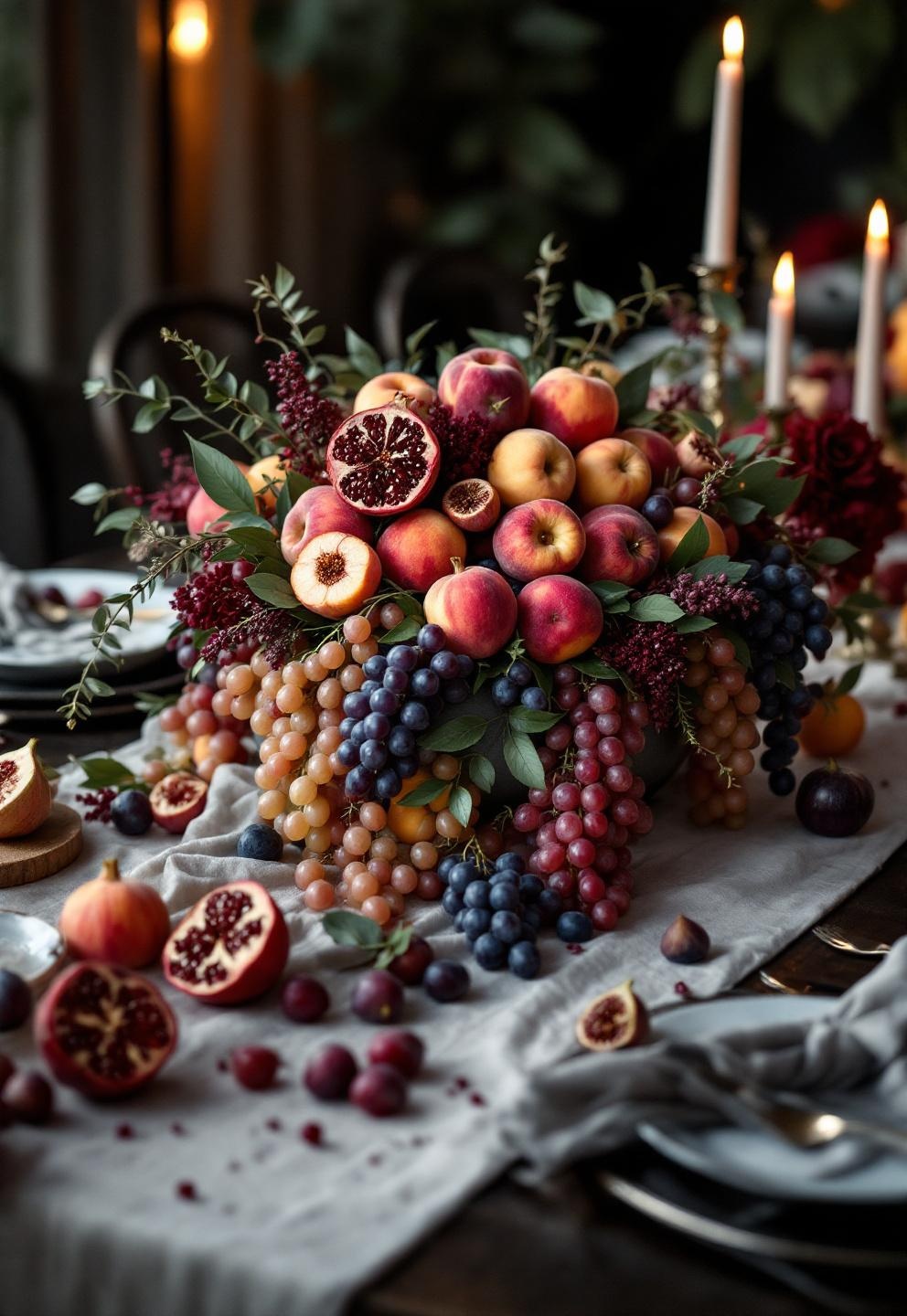
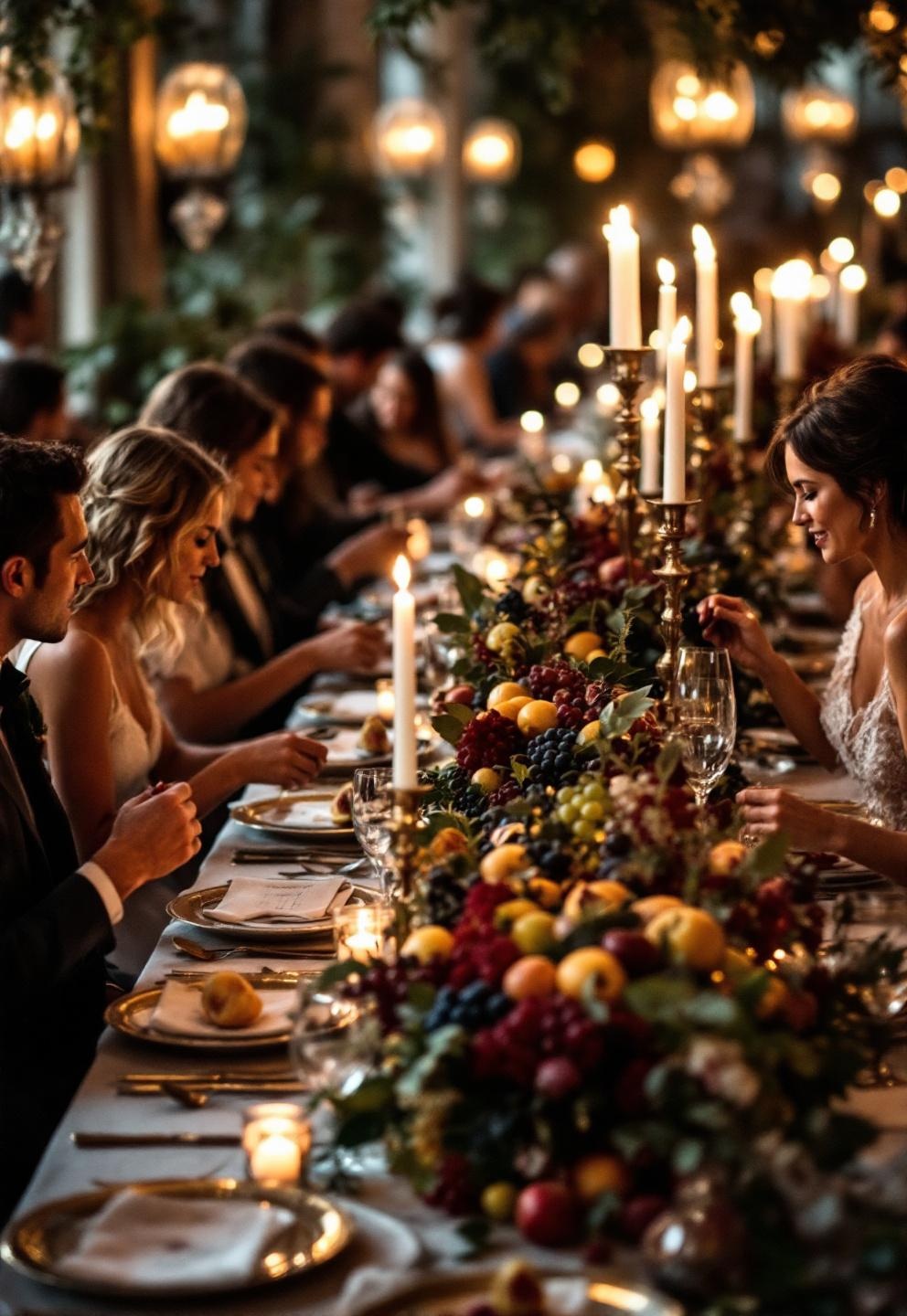
Fine-art references like Dutch Master paintings shape many stone fruit centerpiece ideas, but practical translation takes work. Here’s how to achieve the look—safely:
- Texture balance: Mix matte-skinned fruits (peaches, plums) with high-gloss grapes and pomegranates for depth.
- Color drama: Work with maroon, ochre, muted jade, and plum—think chiaroscuro with light and dark interplay.
- Asymmetrical massing: Let grapes and figs “spill” or drape over edges to mimic still life dynamics.
- Embrace imperfections: Slight bruises or uneven surfaces read as authentic—just avoid mold or severe damage.
- Safe mechanics: Use food-grade dowels, picks, and sealed vase bases to keep stems/pollen away from edible fruit.
- Non-contact florals: If not food-safe, barrier-wrap or position flowers so they never touch edible produce directly.
There are no published, detailed guides on safe Dutch Master-style centerpieces—combine art inspiration with rigid food handling for best results.
Practical how-to: timeline, assembly, storage and teardown for multi-hour receptions
Time management is vital when working with perishable fruit. Use this practical timeline:
- T-48–24 hours: Purchase fruit and florals; pre-wash and store at refrigeration temps.
- T-6–3 hours: Pre-assemble base arrangements (vessels/greens) if possible; chill prepped fruit.
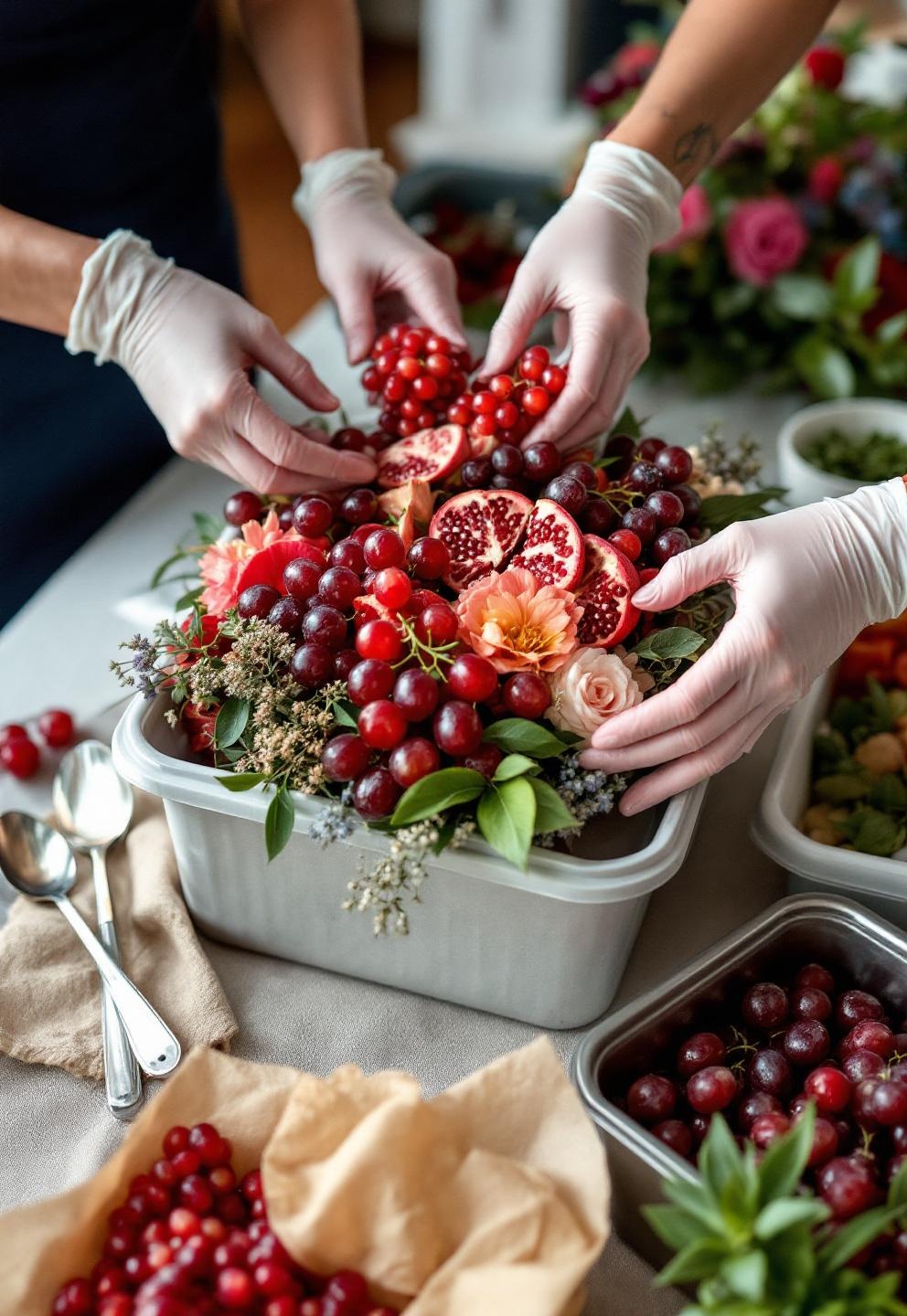
- T-2–1 hour: Assemble final centerpieces on site, wearing gloves. Inspect for bruising and replace as needed.
- During event: Assign floater staff to remove damaged fruit, tidy displays, and monitor pest risks.
- Teardown: Label surplus edible fruit for safe guest takeaway or donation. Compost leftovers if possible; record any spoilage for post-event learning.
Vendor brief and contract addendum (copy-ready)
It’s risky to assume your vendor knows edible centerpieces. Use this copy-ready brief:
Vendor Brief:
- All fruit for edible centerpieces must be pre-washed and stored at 40°F/4°C or below.
- Assembly must be completed with gloves and sanitized tools.
- Label each display “Edible—Safe to Eat” or “Decor Only.”
- Florals may not touch edible produce unless wrapped or food-safe.
- Vendor staff to inspect displays every 2 hours for spoilage, pests, and guest safety.
- Remove and replace any bruised/damaged fruit during the event.
- Vendor is responsible for end-of-night removal or donation of unused fruit.
Contract Clause Sample: “Vendor retains responsibility for food-safe preparation, refrigeration, labeling, event monitoring, and cleanup of all fruit and floral centerpieces. Noncompliance permits client to request removal or replacement at vendor expense.” Add an inspection checklist to your walkthroughs or pre-event calls.
Visual inspiration and mood-board direction (shooting brief)
Want your photos to feel editorial, not literal? Reference Dutch Master wedding fruit centerpiece moods:
- Palette: Deep maroon, ochre, muted jade, olive, and rich cream.
- Props: Pair fruit with matte ceramic bowls, pewter trays, wrought iron, or weathered wood vessels.
- Backdrop: Use dark linens for high drama or Cloud Dancer white tones for contrast; see airy white tablescape for inspiration.
- Photography: Request directional side-lighting (warm, late-day sun or artificial equivalent). Low overall lighting delivers painterly shadow. For more guidance, consult soft lighting wedding theme.
- Sample captions: “A feast for the eyes—and palate.” | “Still life, party style.” | “Art meets appetite at our reception.”
Appendix — Quick reference tables and printable checklists
Print or save these tables for planning and vendor meetings.
Seasonality Calendar (US & UK)
| Fruit | Peak Months |
|---|---|
| Grapes | Jul–Nov |
| Pomegranates | Sep–Jan |
| Figs | Jun–Sep |
| Stone fruits (Peaches, Plums, Cherries) | Jun–Sep |
Sanitation Quick-Check
- All fruit washed with food-safe sanitizer?
- Gloves, sanitized knives/boards used for prep?
- Refrigerated until setup?
- Edible items labeled?
- pest management completed pre-event?
Budget Worksheet (Per Table)
- Fruit (type/weight): ______ $_____
- Florals/Herbs: ______ $_____
- Display vessels: ______ $_____
- Setup/Labor: ______ $_____
- Refrigeration: ______ $_____
- Total per table: $_____
Stain Removal Cheat-Sheet
- White vinegar for pomegranate/grape juice on fabric
- Club soda for wood/table stains (test first)
- Pack extras: napkins, wipes, gloves
Emergency Replacement List
- Pre-washed backup fruit (grapes, small apples)
- Simple floral runners (herbs, greenery)
- Extra vessels or votives in case of fruit shortage
For an expanded tablescape reference, study serpentine table rental and cobalt blue floral arrangement guides for integration ideas.
Conclusion
Sourcing, designing, and displaying a wedding fruit centerpiece is not just about aesthetics—it’s a matter of food safety, compliance, and operational planning. When you focus on these overlooked details, your centerpieces will delight guests, meet health codes, and truly stand out. Ready to brief your planner or florist? Download the checklists above, start sourcing seasonal produce, and share this playbook for a safer, smarter, more beautiful wedding tablescape.
Frequently Asked Questions
Can any fruit be used in a wedding fruit centerpiece?
No. Prioritize fruits that hold up several hours at room temperature—grapes, pomegranates, figs, stone fruits. Avoid high-moisture or easily damaged fruits. Always pre-wash and only offer edible options if they’ve been handled safely.
What are the biggest food safety risks with fruit and florals centerpieces?
Bacterial contamination (E. coli, Salmonella), cross-contact with non-edible florals/pesticides, and improper storage can all pose risks. Label edible vs decorative items. Store produce chilled.
Is a fruit centerpiece more affordable than traditional florals?
When using seasonal, local fruit, yes—generally $12–$25 per table for fruit, compared to $30–$80 for all-floral centerpieces. Off-season or organic-only choices increase costs. Exact spend varies by supplier and region.
Do I need to hire a caterer for fruit centerpiece setup, or can my florist handle it?
Best practice is to involve a food handler-certified caterer for any edible centerpiece. Most florists are not trained in food safety protocols. Split tasks: florists for assembly, caterers for washing and labeling.
How do I prevent fruit flies and spoilage during my wedding?
Assemble centerpieces just before the event starts, store fruit chilled until use, and assign staff to sweep for pests and remove bruised fruit promptly.
—
Did you try this inspiration ?
There are no reviews yet. Be the first one to write one.