
Event entertainment company selection is now a mission-critical decision for corporate event planners under real budget, timeline, and risk pressure. In 2024 and beyond, getting this hire right means quantifiable ROI, production reliability, and staff time saved. This guide shows how to shortlist and hire top-tier event entertainment companies fast—without guesswork, hype, or avoidable risks.
Key Takeaways
- Corporate entertainment is a fast-growing, tech-driven sector. You need vendors with hybrid, AI, and immersive production capabilities—not just talent booking.
- Clear scope, transparent pricing, and robust contracts cut risk. Push for detailed service breakdowns and production/backup plans at the RFP stage.
- Use a structured, criteria-based shortlist process to compare event entertainment company packages, references, insurance, and ROI metrics from day one.
- Market snapshot — why now is a critical moment to hire an event entertainment company
- What today’s top event entertainment companies are investing in (production & tech)
- Typical service bundles and package components to expect from a professional event entertainment company
- Pricing models and how vendors typically charge (what to ask for)
- Common pain points and challenges in hiring for corporate or multi-act events
- Key differentiators and unmet needs in current supplier offerings (opportunity map for buyers)
- Average costs, contract terms and negotiation levers for medium to large-scale events
- How buyers actually evaluate and shortlist event entertainment companies — criteria checklist
- 15 questions to ask when interviewing an event entertainment company (what to ask pre-RFP)
- Production techniques and tech stack that deliver seamless end-to-end entertainment management
- Quick shortlist template and scoring sheet (downloadable checklist)
- Final decision playbook — procurement steps to hire with confidence
- FAQ: Event Entertainment Company Selection
Market snapshot — why now is a critical moment to hire an event entertainment company
Corporate demand for expert event entertainment companies is surging. The global events industry was valued at USD 1.33 trillion in 2024, with projections to hit USD 2.08 trillion by 2030—a CAGR of about 9.3%. Growth is driven by companies investing in hybrid formats, immersive tech, and digital attendee experiences. Buyers now face greater competition for the best suppliers, who are rapidly expanding capabilities to include live-streaming, interactive performances, and AI-enhanced planning. The Asia-Pacific segment grows fastest, but the US commands the most mature entertainment vendor ecosystem.
Source: Research and Markets, SNS Insider, Coherent Market Insights
What today’s top event entertainment companies are investing in (production & tech)
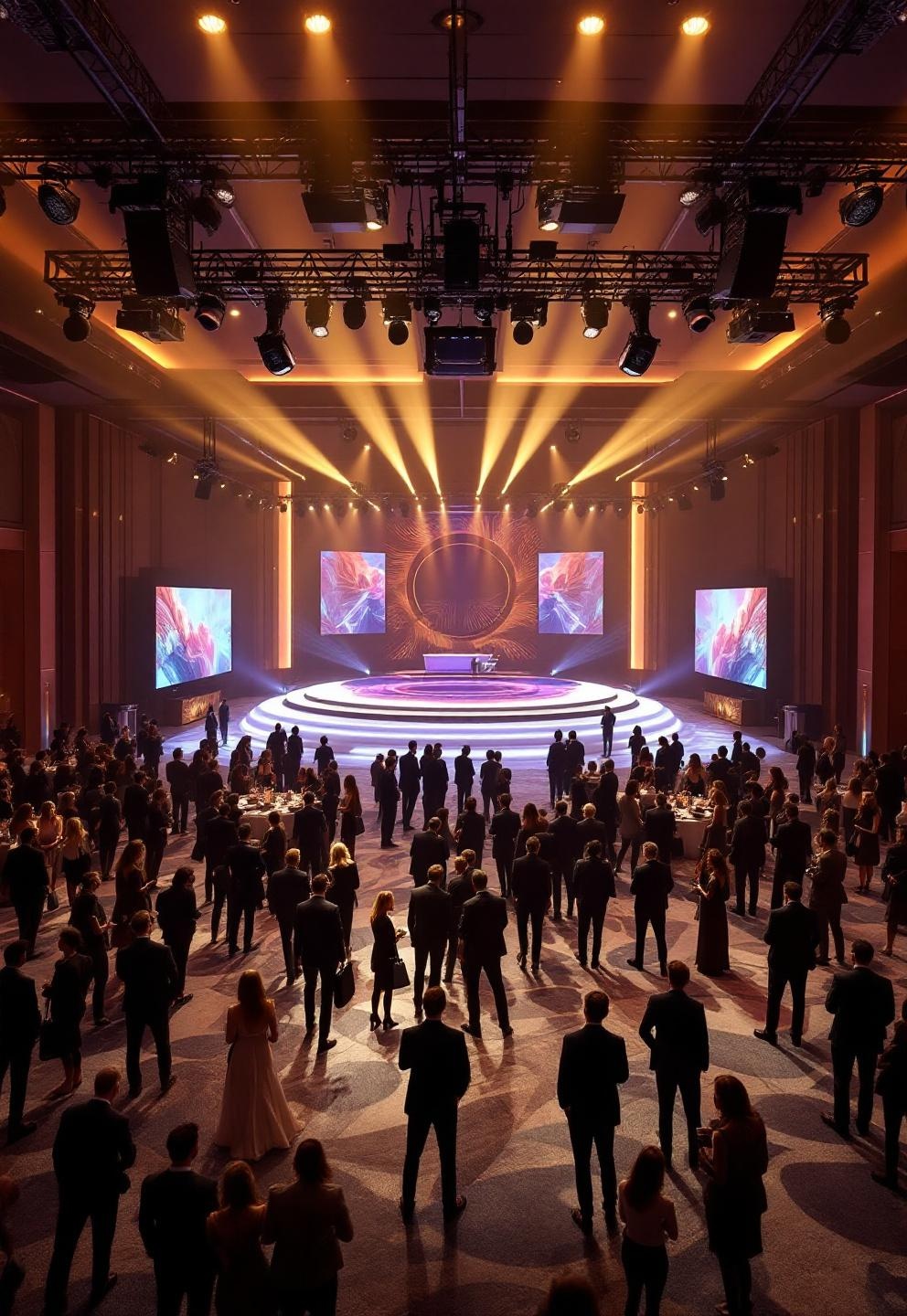
Top event entertainment companies are doubling down on tech. Investments target virtual event platforms, on-demand digital content, AI-driven event planning tools, seamless digital ticketing, and hybrid formats that allow remote participation. The best vendors incorporate immersive attendee engagement—think interactive voting, real-time streaming, and AR/VR production elements. For buyers, this translates to greater ROI, more impactful guest interactions, and lower execution risk, especially for multi-site or hybrid events.
Growth drivers also include the monetization of digital event experiences—many leading companies now offer proprietary platforms or partner with ticketing and analytics providers to give clients granular post-event data.

For more on immersive and technology-enhanced event experiences, see our guide to AR event decoration and sensory wedding decor for inspiration on engaging all audiences.
Typical service bundles and package components to expect from a professional event entertainment company
While current search results do not detail package breakdowns, standard event entertainment company packages for corporate events generally include:
- Talent booking (solo acts, bands, MCs, specialty performers)
- Production management (AV, lighting, sound, staging)
- Tech integration (livestreams, interactivity, digital ticketing)
- Run-of-show creation and stage management
- Rider and logistics coordination
- On-site producer/crew allocation
- Insurance, permits, and compliance checks
Packages vary: single-act (a la carte), multi-act (turnkey), hybrid/streaming add-ons, or full event management. Some companies can offer all-in-one event entertainment solutions with multi-day technical support, while others operate on a performer-only model. Internal references and production track records should be part of the offer for large conferences or awards events.
For more on related package types, see party entertainment packages and full service catering companies.
Pricing models and how vendors typically charge (what to ask for)
Public research does not specify pricing or contract models. In practice, you’ll see five main pricing approaches when you hire an event entertainment company:
- Flat-fee package (all-in services/talent bundled)
- Per-act pricing plus production costs
- Day rates (for on-site or multi-day events)
- Revenue share (for ticketed or monetized digital events)
- Itemized pass-throughs (AV, travel, logistics billed at cost plus markup)
Push for transparent line-by-line proposals. Require
Want to compare catering estimates and package costs as part of your event planning? See catering menu with prices for practical benchmarks.
Common pain points and challenges in hiring for corporate or multi-act events
Buyers report several recurring challenges—even though public search data does not specify detailed pain points for this vertical. Based on industry best practice, look out for:
- Talent schedule conflicts and last-minute substitutions
- Unclear or shifting production scope/talent riders
- AV or technical integration failures (especially hybrid/streaming)
- Vendor misalignment on rehearsal/production standards
- Insufficient on-site crew or stage management
- Poor logistics for multi-location or short-turnaround events
- Insufficient insurance/compliance documentation
Mitigate risk by including in your contract: guaranteed performer substitutions, detailed run-of-show, technical riders approved in advance, clear insurance limits, and performance guarantees backed by payment schedules. Always validate with third-party references and require an onsite technical rehearsal.
To understand how other complex event planning decisions are made (decor, venues), check the event venue near me guide.
Key differentiators and unmet needs in current supplier offerings (opportunity map for buyers)
Despite vendor claims, public data does not highlight explicit differentiators or common fails of the top event entertainment companies. Still, leading buyers have identified several gaps to use as filters:
- Clear, packaged pricing (not “contact us for quote”)
- Integrated hybrid/remote production (not just bolt-ons)
- Strong contingency planning (backup talent and tech onsite)
- Ability to prove event ROI via analytics (not just anecdotal feedback)
- Transparent sustainability and DEIB (diversity, equity, inclusion, and belonging) policies
Ask vendors for documented SOPs (standard operating procedures) for hybrid events, sustainability credentials, and event outcome reporting. Lack of these is a red flag for risk-adverse buyers.
Looking for ideas for immersive or sustainable event design? Explore our resource on eco-friendly event decor rental.
Average costs, contract terms and negotiation levers for medium to large-scale events
Research reports do not publish current market rates for hiring professional event entertainment companies near you for complex events. However, your contract should always specify:
- Deposit schedule (10-30% typical, milestone vs. upfront)
- Detailed cancellation/force majeure language
- Adherence to agreed rider/technical specs
- Proof of insurance and all required permits
- Explicit change-order process (how scope or acts can be amended and priced)
- Performance/service guarantees linked to payment
Common negotiation levers: multi-event or annual discounts, bundling of production + talent, “hold/retainer” flexibility, and escalation clauses for high-profile acts. Always benchmark contract language—don’t just accept a vendor’s boilerplate.
Reference our event entertainment near me guide for urgent vendor selection and negotiation scenarios.
How buyers actually evaluate and shortlist event entertainment companies — criteria checklist
Although public search data does not specify, leading buyers use structured criteria to shortlist candidates, speed up stakeholder sign-off, and keep procurement audit-proof. Key criteria include:
- Proven experience with similar corporate/multi-act formats
- Technical and production capabilities (hybrid, AV/IT stack, crew ratio)
- Current references & actual video reels
- Transparent, line-item pricing with benchmarks
- Insurance, permits, compliance evidence
- Documented run-of-show and contingency plans
- Track record of meeting KPIs or post-event metrics
- Sustainability and DEIB credentials
Apply a scoring system: rank each vendor 1–5 per criterion. Require a minimum threshold (e.g., 3/5 for technical, 5/5 for compliance) before moving to final interviews or demos.
See related scoring approaches on our event venue hire packages guide.
15 questions to ask when interviewing an event entertainment company (what to ask pre-RFP)
Whether you plan to hire an event entertainment company direct or via a managed service, these questions uncover true fit and risk factors:
- What is your experience with events of our size and format?
- Can you provide a sample run-of-show for a comparable corporate or multi-act event?
- What
- Do you offer hybrid and remote audience services, and how are they delivered?
- Can you share itemized examples of recent fee structures for similar clients?
- What are your typical onsite staff/crew ratios?
- Who is the onsite technical director, and are they available for pre-event walkthroughs?
- Provide three current corporate references with video reels and production footage.
- What are your insurance limits and coverages (including public liability and cancellation)?
- How do you handle copyright, media rights, and photo/video delivery post-event?
- Can you share your process for onboarding outside vendors or collaborating with in-house AV teams?
- What is your service-level agreement (SLA) for tech issues or talent cancellation?
- How do you handle run-of-show changes or additions last-minute?
- What sustainability measures and reporting do you offer?
- How do you capture and share post-event data/analytics for hybrid or digital events?
Direct these questions to shortlist finalists only, and request that all answers are documented in your RFP process for internal audit trails.
Production techniques and tech stack that deliver seamless end‑to‑end entertainment management
The top event entertainment companies lead on production standards by integrating:
- Professional AV and low-latency streaming systems
- Cloud-based show control and automation
- AI-driven scheduling and attendee engagement tools
- Immersive LED, projection mapping, and AR elements
- Monetizable, analytics-enabled digital experiences
Always require that your chosen supplier demonstrates a live or video demo of their technical setup. A lack of in-house production capability signals a higher risk of show-day failure, especially with hybrid or multi-site events.
For more inspiration on immersive production, check the sculptural floral installation guide.
Quick shortlist template and scoring sheet (downloadable checklist)
Here is a simple template for comparing event entertainment company packages near you. Give each area a 1–5 score. Require a pass threshold for each “must have”:
| Vendor | Corporate Experience | Production Capability | Hybrid/Streaming Tech | Pricing Transparency | References | Insurance/Compliance | Contract Protections |
|---|---|---|---|---|---|---|---|
| [Name] | [1-5] | [1-5] | [1-5] | [1-5] | [1-5] | [1-5] | [1-5] |
Use this shortlist to advance only those vendors who meet your must-haves. Set up demos and tech walkthroughs for finalists before contract stage. Download more checklist templates in our related guide: Event Entertainment Hiring Guide.
Final decision playbook — procurement steps to hire with confidence
Finish your procurement process with these steps for risk-proof hiring:
- Validate all insurance, technical riders, and compliance documents
- Hold a full
- Review and sign off on a backup talent/tech plan and all SLAs
- Confirm payment schedule, change-order process, and cancellation terms
- Request post-event analytics or reporting on agreed KPIs
Reference market context: “The global events industry market was valued at USD 1.33 trillion in 2024, growing to USD 2.08 trillion by 2030”—vendors know demand is high, so diligence, documentation, and consequence management are non-negotiable.
Conclusion: Hire Event Entertainment Companies with Confidence
The modern event entertainment company is as much a technical partner as a creative one. By demanding data, transparency, and backup planning at every step, you dramatically lower headline risk while making your events more impactful. Use this playbook to hire your next event entertainment company with confidence—and see measurable ROI from day one.
Download the shortlist checklist, run the scoring process, and schedule hands-on demos. When each box is checked, sign the contract and run a technical rehearsal to ensure a seamless experience for your guests.
Ready to take the next step? Review our full Event Entertainment Hiring Guide or ask for a copy of this RFP template for your procurement team.
FAQ: Event Entertainment Company Selection
What is included in a typical event entertainment company package?
Professional packages usually include talent booking, production/AV, staging, run-of-show planning, onsite management, tech integration for hybrid/streaming, logistics, and full insurance. Always ask for itemized quotes and sample run-of-show timelines.
How much does it cost to hire an event entertainment company for a corporate event?
Public research does not provide typical cost ranges. Pricing varies from flat-fee packages (all-inclusive) to per-act plus production charges. Always request several itemized estimates and benchmark key components (talent, AV, travel, crew, insurance).
How do I compare and shortlist event entertainment companies quickly?
Use a scoring rubric focused on experience, production capability, hybrid/streaming tech, transparent pricing, references, compliance, and contractual protections. Only advance vendors who meet predefined pass thresholds on each area.
What should be included in the contract with an event entertainment company?
Your contract should specify deposits, cancellation/force majeure clauses, technical rider adherence, insurance limits, change-order process, and service-level agreements (SLAs) for both talent and technical support.
How can I reduce risk when booking multi-act or hybrid events?
Insist on backup talent arrangements and detailed technical contingency planning. Hold a technical rehearsal, verify real event references, and require that all staff/crew ratios and insurance details are documented before payment.
Did you try this inspiration ?
There are no reviews yet. Be the first one to write one.