
- Quick cost snapshot — what to budget right now
- Permit & fee breakdown for public beaches (step-by-step)
- Rentals & setup cost line-item guide
- Granular tide & shoreline planning (the must-read coastal analytics section)
- Local regulations & common restrictions to verify
- Logistics & common operational challenges — solutions vendors must offer
- Styling trends and decor that play to the seaside
- Venues with the most complex permitting — and easier alternatives that still feel oceanfront
- Environmental incidents reported by couples — what went wrong and how to avoid it
- The 7 critical deep-dive topics most existing articles skip
- Final checklist & 12-week timeline
Quick cost snapshot — what to budget right now
Beach wedding venues offer the promise of a stunning natural backdrop, but the numbers behind that ocean view are not one-size-fits-all. Here’s how 2024–2026 costs break down so you can set a realistic budget before you start calling sites or vendors:
- Public DIY beach wedding: $200–$3,000+ for a simple ceremony. Includes permits ($20–$500, variable by location and season), plus rentals and setups (chairs, arch, sound). You handle all planning, scheduling, and contingency logistics.
- Paid/coordinated public beach package: $1,000–$5,000+ for a vendor-coordinated setup with limited guests—some companies specialize in “pop-up” ceremonies, typically including basic seating, an officiant, and permitting.
- Private resort or oceanfront venue: $2,000–$15,000+ just for site fees, but the all-in wedding (reception, décor, food, and vendors) often lands between $10,000–$50,000+. Higher, but resorts handle permits and backups.
Permits, rental setup, and weatherproofing can swing the total thousands of dollars. For recent real-world averages:
- Chair rental for 50 guests: about $500 (including beach delivery fees)
- Rental wedding arch: $50–$300
- Total rental/setup typical range (public beach): $1,000–$3,000+
(Source: CostHelper and WeddingFrontier)
Permit & fee breakdown for public beaches (step-by-step)
Every U.S. beach is regulated by a mix of city, county, and sometimes state parks departments. Here’s how to tackle permits for beachfront wedding locations:
- Identify jurisdiction: Start on the city/county parks or beaches department websites. Examples: California State Parks for Malibu, City of Miami Beach for South Pointe.
- Apply early: Lead times are typically 2–6 months. Some high-demand zones release dates once per year.
- Know your triggers: Fees increase for guest counts above 50–100, any structures (arches, tents), or amplified sound—these can require a “special event” permit, not a regular gathering.
- Have details ready: Date, time (especially for tide timing!), number of people, exact area, and any planned objects/décor. Some agencies require an event footprint diagram.
- Budget for extras: Power, restrooms, and overtime are often charged separately. Many require a damage or cleaning deposit ($50–$500).
Public beach permits generally cost $20–$500+. You must check event calendars for pre-existing bookings—public beaches cannot be “reserved” for exclusive use, but permits give you legal rights to assemble and set up.
Email/script template for permit request:
Hello [Parks Department Name],
We are seeking a permit for a wedding ceremony at [Beach Name] on [Date], with [number] guests, and would like to bring in [chairs, arch, sound system]. Could you provide guidance on permit types, seasonal restrictions, and any application deadlines?
Thank you,
[Your Name]
Want deeper examples? Compare regulatory specifics for your target beach with this guide’s “concrete municipal examples” checklist below. For regional quirks, check the CostHelper beach wedding permitting guide.
Rentals & setup cost line-item guide
Calculating rentals on a beach is not just a matter of chair count—it means accounting for extra labor, delivery, and windproofing. Here’s how the typical rentals shake out for beach wedding venues or oceanfront wedding venues:
| Rental Item | Sample Price (50 Guests) |
|---|---|
| Chairs (simple) | $500 (includes delivery, setup, beach labor) |
| Arch (simple/formal) | $50–$300 |
| Battery-powered sound/PA | $250–$600 |
| Pop-up tent/canopy (optional, 10’x20′) | $200–$500 |
| Portable restroom (if no nearby access) | $200–$750 |
| Walkway matting/platform (ADA accessible) | $150–$800 |
| Florals/minimal décor | $400–$1,200 |
| Setup/cleanup labor (required at most sites) | $300–$1,200 |
For 100 guests, double most costs (but delivery/labor may not scale linearly). Many vendors add a 10–25% premium for beach/sand setup due to transport complexity.
Example scenario: 50 guests on a public beach—minimal arch, chairs, PA, tent, and labor: total rentals and setup = $1,700–$3,200. Does not include food or full reception.
Always ask for breakdowns and confirmation that delivery fees account for sand/boardwalk distances (carting equipment half a mile is not standard for land venues). For more line item tips, see our outdoor wedding venues planning guide.
Granular tide & shoreline planning (the must-read coastal analytics section)
This is the section that separates experienced planners from the rest. Tides are not just background info—on many seaside wedding sites, mistiming could shrink your sandy aisle to “nothing but seaweed.”
- Get local tide charts: NOAA and Tide-Forecast offer up-to-date tables for every U.S. coastline.
- Avoid high tide: High tide can render your chosen spot unusable. Target mid-ebb (tide going out) or low tide for ceremonies, typically 1–2 hours after high tide. Spring tides (full/new moons) have higher high tides—double check these lunar dates.
- Check beach slope & profile: Flat, gently sloping beaches are safer. Narrow, steep, or erosion-prone areas lose space faster as tide rises or after storms.
- Visit your site at both high and low tide: Mark the water’s highest reach (debris line is a good clue). Don’t rely on what you see in tourist photos outside your season.
Tide & shoreline planning mini-checklist:
- Mark the highest water line and ensure at least 30 feet between it and the nearest guest chair row.
- Observe typical debris/seaweed accumulation—some beaches smell or look dramatically different after storms.
- Measure walking distance from nearest parking or drop-off to ceremony spot (sand is slower than you think).
Example: A couple in Cape Cod chose a noon ceremony but, due to a spring tide, found only half the expected space. Their aisle was squeezed between water and dunes, causing last-minute stress and compact seating.
For accurate tide-timing, always set your ceremony time with an extra minimum 30–40 minutes buffer after predicted low tide. This is essential for beachfront wedding locations.
Local regulations & common restrictions to verify
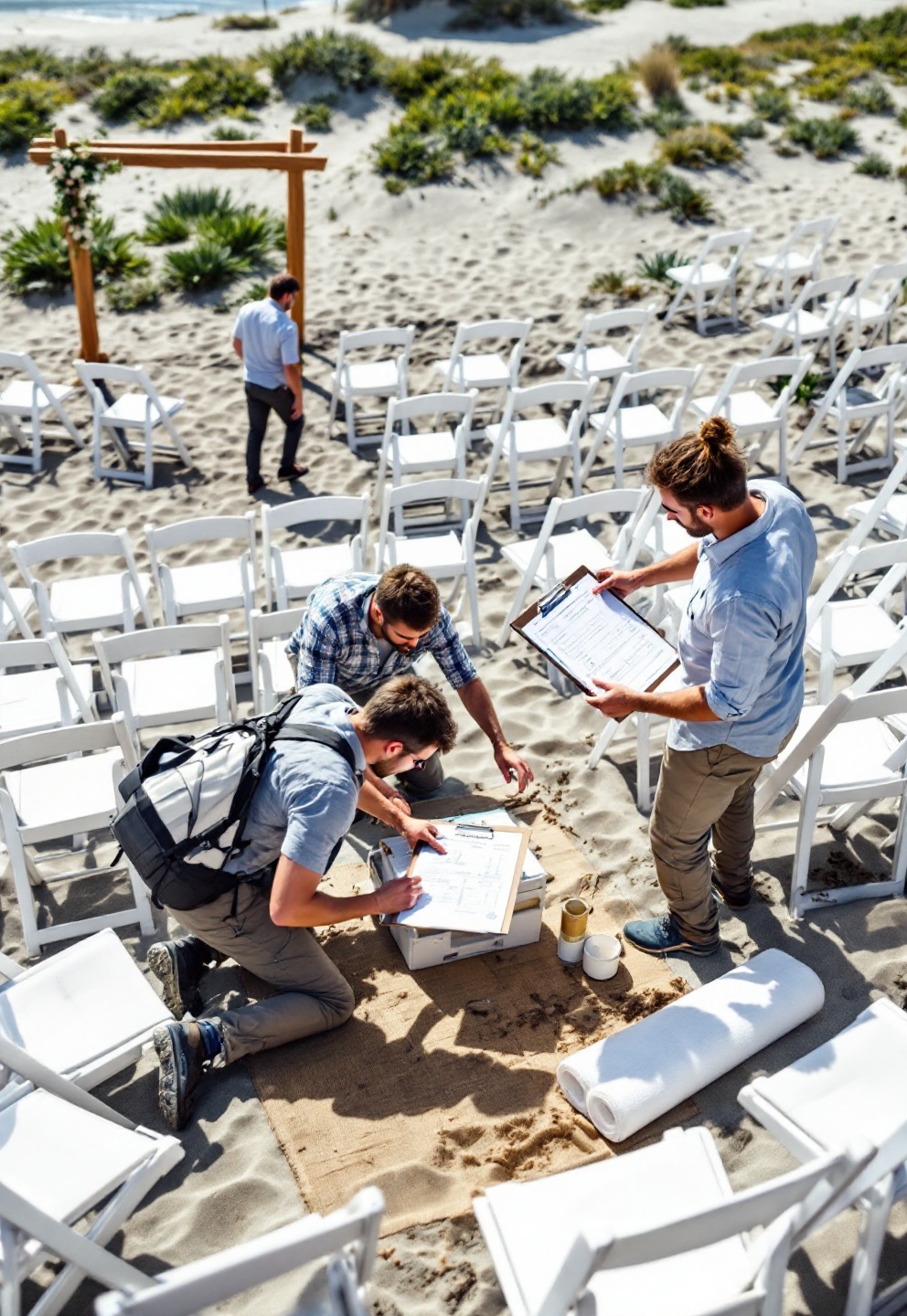
Not all beaches are equally permissive. Here are rules that frequently affect coastal wedding venues and may surprise couples:
- Amplified sound curfews: Music must stop by 8–10pm; microphones may be banned or restricted to limited wattage.
- No alcohol on the beach: Most public beaches ban alcohol unless you secure a separate permit (when even available). Fines can run into hundreds if violated.
- No tent stakes in dunes: Many areas with protected habitats (sea turtle/bird zones) prohibit driving stakes or posts into sand or dunes. Only free-standing, weighted bases allowed.
- Wildlife/habitat restrictions: Some beaches close for nesting or migration seasons—especially Atlantic and Gulf coasts (May–October for turtles).
- No confetti, no glass, no balloons: Strict debris and environmental rules apply—most restrict non-biodegradable decorations or open flame.
Permit fees commonly range $20–$500+. Local rules vary widely—even beaches a mile apart may fall under different agencies. When in doubt, email the parks department before committing any funds. For decor tips that fit these rules, see our sustainable event decor hub.
Logistics & common operational challenges — solutions vendors must offer
Beach events are operationally complex. Here’s how to tackle what often derails even tightly planned oceanfront wedding venues:
- Parking/access: Public lots fill early; some beaches have no legal parking close by. Book a shuttle or provide drop-off instructions, especially for elderly/ADA guests.
- Power/sound: There are rarely any outlets. Rent battery-powered PAs (best for simple ceremonies) or whisper-quiet generators. Confirm with both your vendor and parks office about permitted equipment.
- Weatherproofing: Coastal winds destroy average tents. Specify “wind-rated tents” with sidewalls, or opt for open canopies if rules prohibit full tenting. If rain is more than a distant risk, allocate $2,000–$4,000 for tent, flooring, and backup restroom rental.
- ADA access: Lay portable walkways (matting) for wheelchair users or anyone with limited mobility. Don’t estimate sand as “walkable” for all.
- Cleanup responsibility: Many beaches require a cleaning deposit, refunded only if the area is spotless after. Hire a vendor who guarantees cleanup, or designate an on-call team. Failure to clean up can lose your deposit or hamper beach access for others.
When hiring, always ask vendors how many beach weddings they’ve serviced and request itemized, explicit surcharges for sand or long carry-in. Negotiate for “all-in” setup/teardown when possible. For more detail, our outdoor event venue checklist covers weather contingencies and power needs.
Styling trends and decor that play to the seaside (practical, wind-aware ideas)
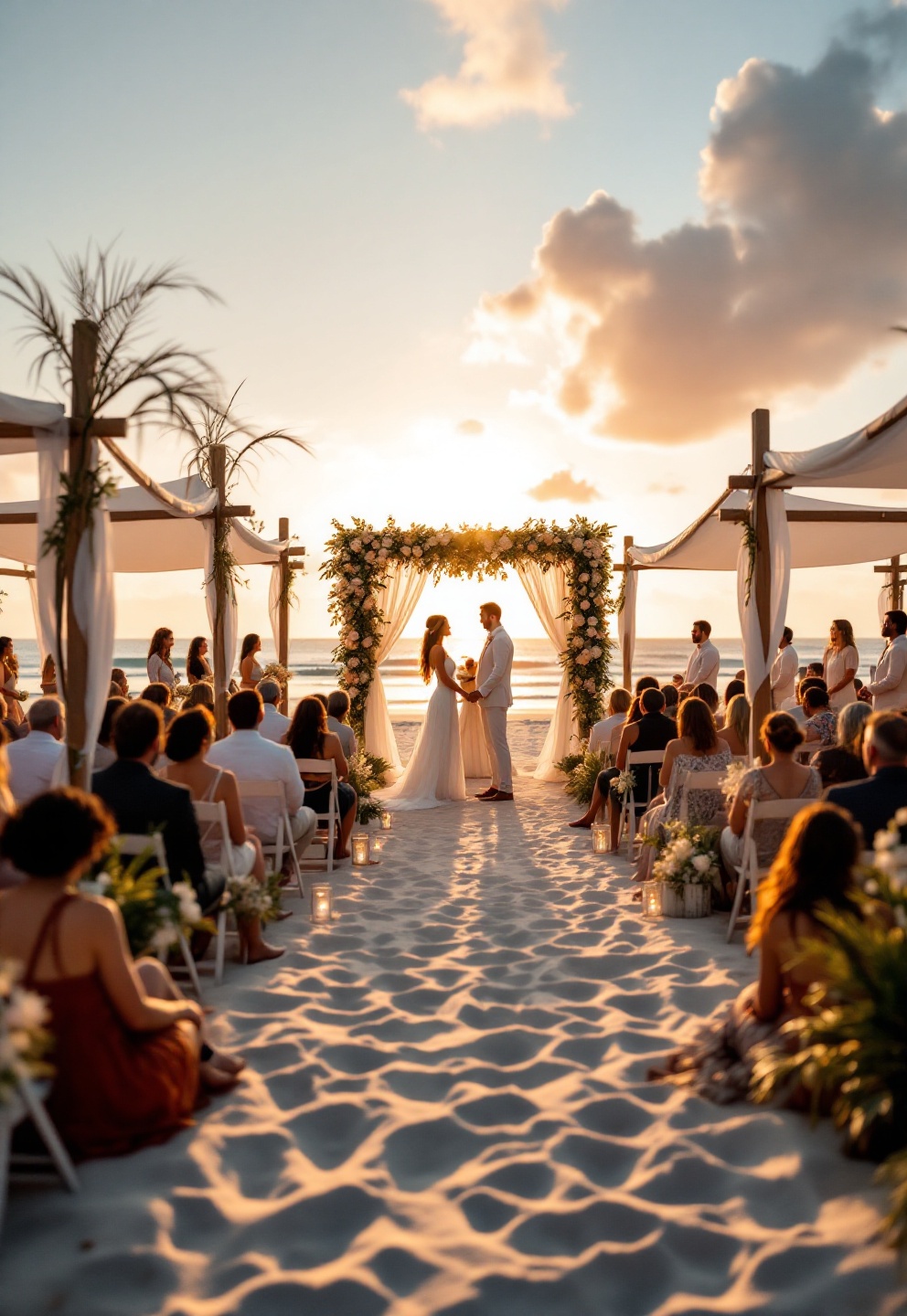
Styling for seaside wedding sites is about harmonizing with the ocean—not overwhelming it or fighting the elements. As of 2024–2026, three practical décor approaches are trending:
- Economy: Simple driftwood or white folding chairs, a lightweight rental arch ($50–$150), and minimal dried floral bundles. Total: $1,000–$1,500. Less is more—and less to blow away.
- Mid: Weighted white chairs, flowing micro-floral arch, soft runners, parasols for guests, and rented lanterns (LED or sandbagged; no glass). $2,000–$3,000, prioritizing guest comfort.
- Showstopper: Custom arch with integrated shade sails, upholstered seating, low “meadow” style florals hugging the sand, and professionally installed sailcloth tent. $4,000+, but every element chosen for weight and weather resilience.
Practical style rules: For all packages, use low centerpieces (e.g. meadow tablescape), avoid tall vases, and fasten fabric with hidden sandbags or stone weights. Lighting? Stick to battery-powered lanterns or string lights, not open flames. Explore the sensory wedding decor trend for immersive, wind-tolerant ideas.
Venues with the most complex permitting — and easier alternatives that still feel oceanfront
Not all coastal wedding venues are equally hard to book. Complexity is highest in:
- Popular urban beaches: e.g., Santa Monica (CA), South Beach (Miami), parts of New York/New Jersey. Multiple agencies, higher permit fees ($250–$1,000+), strict capacity caps (often 50–100 guests), and event calendars that fill a year out.
- Protected park/beach zones: State or national parks (e.g., Assateague, Cape Cod National Seashore) may require environmental assessments, multi-step approvals, and public posting periods. Habitats may be off limits during nesting season.
Easier alternatives:
- Private oceanfront resorts: They handle all permitting, security, and weather contingencies, but you sacrifice some vendor choice and typically pay a premium ($10,000–$50,000+ for a full package).
- Ocean-view lawns or terraces: Many community halls and private estates offer “beach-adjacent” views without permitting headaches; rentals for 100 might run $5,000–$20,000, but setup is simpler and backup spaces are often built-in.
- Destination all-inclusive resorts: In Mexico or the Caribbean, $5,500+ covers ceremony, a mini reception, and permits for 30–50 guests—simpler but may add air travel/international logistics.
Decision matrix:
| Venue Type | Permit Complexity | Control | Typical Cost |
|---|---|---|---|
| Urban public beach | High | Moderate | $2,000–$7,000+ |
| Protected park beach | Very High | Limited | $1,500–$5,000 |
| Private resort beach | Low (handled for you) | Less—vendor restrictions | $10,000–$50,000+ |
| Ocean-view lawn/terrace | Low | High | $5,000–$20,000 |
For sample alternatives and pros/cons, check our main outdoor wedding venues hub.
Environmental incidents reported by couples — what went wrong and how to avoid it
Even with planning, nature can surprise. Here are the most common “failure points”—and how to build in resilience at any beach wedding venues:
- Rain/storms: Sudden weather shifts forced several late-summer couples to relocate to backup halls or cluster under inadequate tents. Backup tenting added $3,000+ to late bookings. Always pre-book rain contingency—even if only for partial setup.
- Wind toppled décor: Multiple couples report arches collapsing mid-ceremony or floral arrangements scattering. Solution: always use extra ties, weighted bases, and low-profile décor.
- Space “shrinks” from erosion: Seasonal profile shifts meant a March site visit looked twice as wide as the mid-July reality. Double-check spacing within 2 weeks of your date and have a backup seating plan.
- Wildlife and seaweed: A Gulf Coast couple arrived to a massive seaweed wrack and fish smell after a storm. Solution: check with local parks about scheduled “beach grooming,” and plan for quick on-site cleanup or relocation if needed.
- Guest distress (heat, walking): Dehydration and fatigue set in when there was no shade or water, and sand walkways weren’t navigable for elders or ADA guests. Build shade and hydration into your budget, and allow realistic travel times for all guest types.
Best practice: Purchase one-day weather insurance (typically $200–$500). Designate a day-of coordinator with on-call shuttle/relocation authority. Confirm all site plans with up-to-date beach photos no more than a month out.
The 7 critical deep-dive topics most existing articles skip
Planning a flawless beachfront wedding location takes more than a Pinterest board. Here are the practical “sub-topics” that deserve your proactive attention, with first steps for each:
- Granular tide & shoreline analytics:
- Download tide tables for your intended date/location; annotate highs, lows, and buffer windows.
- Visit your site during both predicted tides to confirm usable space.
- Concrete municipal permit examples:
- Compare permit types/rates for at least two candidate beaches. Ask about structures, guest limits, and seasonal blackout dates.
- Request sample event diagrams from the parks office.
- ADA & accessibility (on sand):
- Survey guest mobility needs in your RSVPs.
- Ask vendors about temporary walkway mats or accessible platforms; check if these require extra permits.
- Power/audio infrastructure:
- Ask your PA or musician for detailed power requirements.
- Check beach noise/generator restrictions and battery limitations before confirming bookings.
- Vendor/labor surcharges for beach conditions:
- Request written labor surcharges for sand setups, long walks, or after-hours tear-down.
- Cross-compare quotes between land venues and your beach to see true “venue effect.”
- Environmental risk management:
- Map erosion history or ask the parks office for recent beachline changes.
- Review insurance options that specifically cover “force majeure” coastal incidents (storm surge, wind, wildlife interruption).
- Sustainability & habitat-safety:
- Choose biodegradable or reusable décor; ban all single-use plastics.
- Ask venues/vendors for their post-event waste and recycling plans in writing.
For more actionable checklists and worksheet templates, visit our eco-friendly event decor guide and outdoor venue checklist.
Final checklist & 12-week timeline
Once you’ve absorbed all the details above, convert them into action:
- 12 weeks out: Identify target beach/venue; begin permit inquiry (expect 2–12 week process)
- 10 weeks out: Contact beach-experienced vendors for rentals/chairs/PA; request labor-inclusive quotes
- 8 weeks out: Confirm ceremony time with tide table; hold rain backup (tent/indoor space)
- 6 weeks out: Finalize guest accessibility needs; secure walkway/flooring if needed
- 4 weeks out: Double-check high-tide site plan; collect photo proof of current shoreline/parking
- 2 weeks out: Reconfirm all permits and site rules; remind vendors of entry/access/parking plans
- Event day: Onsite assessment at least 3 hours before; weather and tide check; deploy backup plan as needed
- Post-event: Complete cleanup; verify with park staff for refund of cleaning deposit
Bookmark or print this as your plan backbone, and start every conversation (with both vendors and agencies) armed with tide, access, and regulatory data—not just a vision board. For full venue selection strategy, our event planning guide is a deep-dive complement.
How much does a beach wedding venue actually cost, all in?
Depending on your approach, total costs vary: public DIY beach ceremonies with rentals and permit average $2,000–$5,000; private oceanfront wedding venues go from $10,000–$50,000+ when including reception, catering, and décor. Most surprises come from rentals and weatherproofing.
How do I avoid last-minute beach wedding disasters?
Lock in a solid backup plan: rent a tent with wind-rated sidewalls, schedule your ceremony around low or ebbing tide, and have a nearby indoor site on hold during storm season. Always recheck the site within two weeks, as tides and erosion can change usable space.
What if my beach ceremony needs ADA-friendly access?
Request portable walkway matting or hard platforms from rental vendors, confirm footprint with your permitting office, and allow extra time for guests with mobility needs to cross sand. Advance planning is essential, as some beaches have limited ADA accommodation.
Which public beaches are easiest for wedding permits?
Generally, less crowded and non-urban beaches have simpler, faster permitting with fewer restrictions; city beaches or protected parks (like many in California or Florida) have more steps. Private resorts, while pricier, handle all permitting for you as part of their packages.