
- Why barn wedding venues still matter in 2026: Market snapshot & booking realities
- Is a country barn wedding the right fit for you? A quick decision framework
- Top complaints couples face with rustic barn weddings—and what to watch for on tours
- Seasonal considerations: How month and weather change suitability and price
- Realistic cost breakdown for renting a converted barn venue (sample budget for ~120 guests)
- 12 critical questions to ask before booking a farm barn reception
- Top 5 décor themes for barn weddings—creative customization and budget splits
- What most guides miss: Under-covered topics every couple and venue owner should know
- How to book: Timeline, negotiation tactics, and next steps
- Quick printable: “Barn Venue Tour Script” + Budget Snapshot
Why barn wedding venues still matter in 2026: Market snapshot & booking realities
Barn wedding venues remain a major force in the U.S. wedding market, attracting about 17–20% of receptions—nearly one in five couples choose barns, farms, or ranches for their celebration (source). Despite trend headlines in some style circles, the data confirm barns are still among the top three wedding venue types nationwide.
However, the market is no longer in runaway growth. The proliferation of new barn venues (and adaptive reuse competitors like warehouses and greenhouses) means more choices but also greater competition for the best dates and locations. This has led to two realities for couples:
- Booking windows: For peak Saturdays in September and October (still the most popular wedding months), top barns are often locked 12–18 months in advance. For less sought-after Fridays or off-season dates, you may find availability closer in—sometimes as little as 6–8 months out, with more latitude to negotiate on price.
- Pricing is both competitive and variable: Many barns price aggressively for premium months. In softer markets, you may be able to secure added value (extra hours, linens, décor upgrades) by booking slightly off-peak dates.
Bottom line: If you want a barn wedding venue in high season, start searching and touring as early as possible once you have a guest count—especially in regions with limited supply. For flexible couples, there’s more room to negotiate for Fridays, Sundays, or winter months.
Is a country barn wedding the right fit for you? A quick decision framework
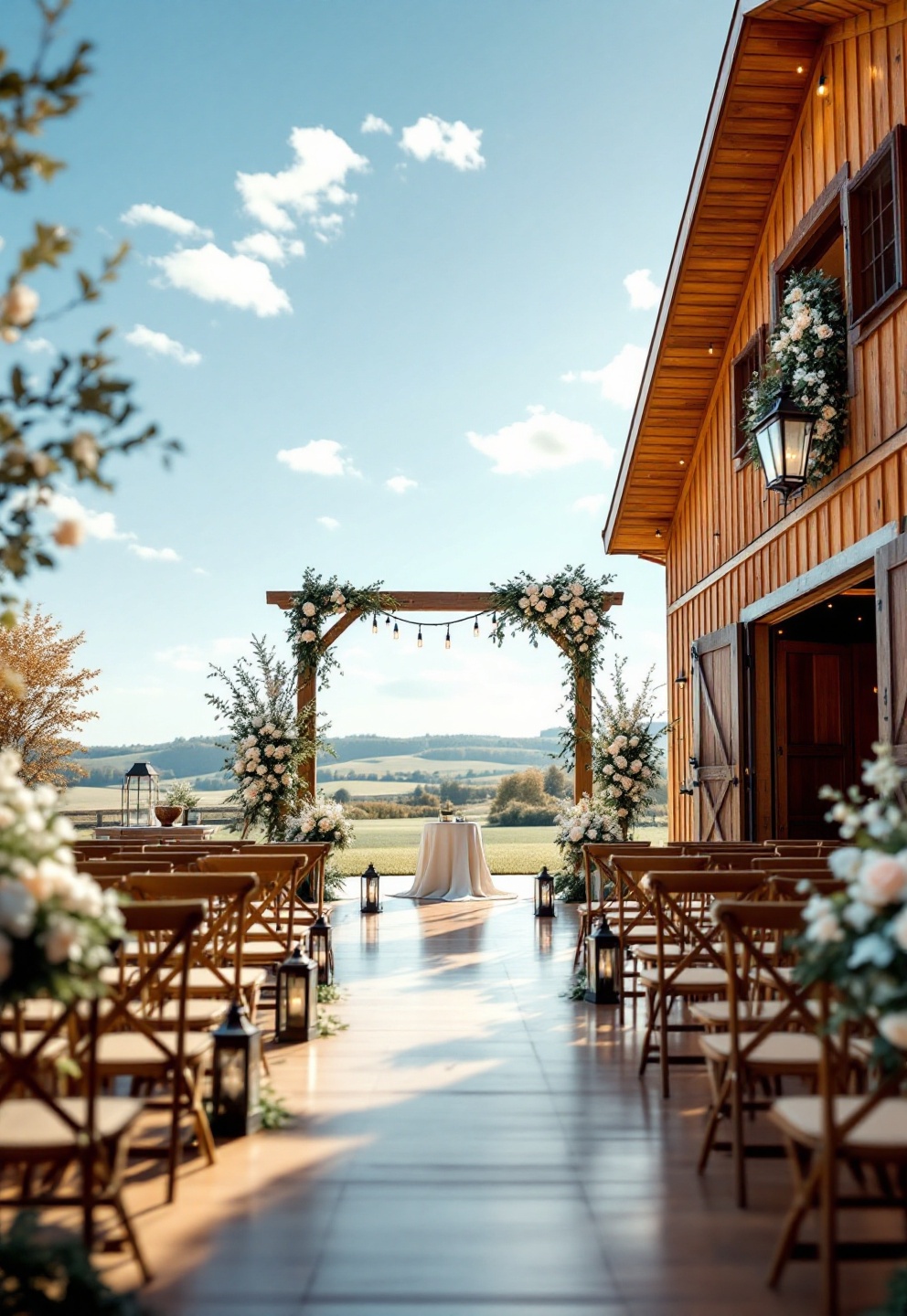
Not every couple thrives with the unique trade-offs of a country barn wedding. Before falling for a dreamy photo, use this scorecard to assess whether a barn venue aligns with your needs and priorities:
- Location & Accessibility: How far will most guests need to travel? Are there local hotels or shuttle options? Will older or mobility-impaired guests be able to navigate gravel paths and barn floors?
- Venue Infrastructure: Confirm what amenities are permanent vs. portable—does the barn have true HVAC, indoor restrooms, paved parking, or just the basics?
- Budget vs. Vision: Can your décor, rental, and infrastructure needs fit within your budget once venue, catering, and logistics are factored in? Remember, the venue will typically consume ∼37–40% of your total budget, or around $12,000 of a $30,500 average spend (source).
- Season & Comfort: Are you set on a May–October date, or open to off-season? Can your ideal barn venue deliver climate comfort for your chosen month?
- Vendor Flexibility: Does the barn allow you to select your own caterer, bar, and coordinator—or do they require you to use their preferred list?
Red flags during site visits: Only portable restrooms (with no indoor option), no HVAC (even in shoulder months), steep or gravel-only parking, or strictly limited setup/teardown time.
If you can answer “yes” to 4 out of 5 areas, a country barn wedding is likely to be a practical—and beautiful—fit.
Top complaints couples face with rustic barn weddings—and what to watch for on tours
Converted barns deliver atmosphere, but are notorious for a core set of pain points. Here are the main risks, how they show up, and what to check during your tour:
- Climate control & comfort: Older barns may lack AC, heating, or even fans. On-site check: Look for visible HVAC vents or thermostats—not just portable fans or heaters stashed in a corner.
- Restroom quality & ADA: Some barns rely on portable restrooms or old outbuildings. On-site check: Ask to see all restrooms guests will use—if you’re seeing trailers outside or long lines, factor in costs to upgrade rentals. Also, verify ADA-compliance for any guests with accessibility needs.
- Weak or unclear weather/rain plans: Beautiful lawns don’t count as backup—your real “plan B” is the indoor capacity. Ask: “What’s your maximum indoor guest count for ceremony and reception if outdoor spaces can’t be used?” Insist on a written rain plan and a sketch layout.
- Hidden costs & rentals: Many barns advertise a low base fee, then add charges for tables, chairs, ceremony sites, cleanup, or require specific vendors. Tip: Get an all-in quote in writing and ask if there are required packages.
- Logistics, parking, and lighting: Limited on-site parking, dark rural roads, and lack of lighting can make guest arrival and departure risky. Verify: Parking surface (paved or gravel), number of spots, if shuttles are required, and whether there’s sufficient lighting from driveway to barn entrance.
- Noise & curfews: Many rural areas have strict curfews or noise restrictions. Ask directly: “What’s the required end time for amplified music, and what’s the fee for going over?”
- Décor & setup labor: Blank barns need a lot of styling—lighting, drapes, furnishings—which can spiral costs. If setup/teardown windows are tight, you may need to hire extra help or a planner to flip the space in time.
In practice, these challenges account for almost all negative feedback about rustic barn weddings (source). Address them early and clarify in writing to avoid surprises (venue packages often land in the $10,000–$20,000+ total range just for venue/décor/logistics pieces).
For more on maximizing comfort and guest enjoyment outdoors, see this guide to immersive landscape weddings.
Seasonal considerations: How month and weather change suitability and price
Just over two-thirds of weddings (∼69%) happen between May and November, with October alone now accounting for about 17% of all U.S. weddings (source). This seasonality has big implications for barn wedding venues.
- Spring (March–May): Lush surroundings, but high rain risk—ask about waterproof walkways, covered entry, and true indoor-backup plans.
- Summer (June–August): Long daylight, but heat can be extreme. Only book non-air-conditioned barns if you’re confident in ventilation/fans, and supply water and shade for guests.
- Fall (September–November): Peak aesthetic—colorful foliage, harvest décor. Nights get chilly quickly, so check for portable heaters or permanent HVAC.
- Winter (December–February): Unique ambiance and deals, but increased risk of cold, icy travel, and heating needs (many barns close or only host micro-weddings off-season). If considering winter, ask about insulation and see heating units in action.
Negotiation tip: For off-season or mid-week weddings, venues may reduce minimums or include extras—be prepared to ask about off-peak packages or bundled décor deals.

Realistic cost breakdown for renting a converted barn venue (sample budget for ~120 guests)
Your barn venue budget will hinge on inclusions, season, and guest count. Here’s a data-driven example for a 120-person wedding, blending industry averages (source):
| Item | Cost Range | Typical Inclusion? |
|---|---|---|
| Base venue rental | $4,000–$12,000 | Yes |
| Catering & bar (120 x $100 avg) | $9,000–$15,000 | Rarely included |
| Décor & florals | $3,000–$10,000 | No |
| Lighting (if rental) | $500–$3,000 | No (limited basics may be included) |
| Restrooms (upgrades/extra rentals) | $500–$2,000 | Possibly |
| Chairs, tables, linens | $1,000–$2,500 | Sometimes |
| AV/sound systems | $400–$1,500 | No (may be required to rent) |
| Tent (backup/ceremony, if used) | $1,500–$5,000+ | No |
| Event staff/setup/cleanup | $1,000–$2,000 | Varies by venue |
| Overtime/security/other fees | $300–$1,500 | No |
Sample “all-in venue-related range”: $10,000–$20,000+ (exclusive of photography, attire, DJ, cake, etc.).
- Biggest surprises: Décor, upgraded restrooms, overtime/setup/cleanup, weather backup tents, required vendor packages
- Ways to save: Book Fridays/Sundays, combine events onsite, use local vendors, focus on impactful but scalable décor (see examples in our décor guide below)
See how to optimize local catering costs for barn weddings.
12 critical questions to ask before booking a farm barn reception
Copy this must-ask checklist for your barn venue tour. After each, a “good answer” example is provided:
- Are you fully permitted and up to code for events of our size?
Why: Ensures legal operation and safety.
Good answer: “Yes, we have current permits for 150 guests and can provide documentation.” - What is the maximum capacity, and does that include space for ceremony, dance floor, and food service?
Why: Avoids surprising space crunch.
Good answer: “120 seated for dinner with a dance floor, or 150 theatre-style for ceremony.” - Is there permanent HVAC (heating/cooling), or only portable options?
Why: Guest comfort.
Good answer: “We have full central HVAC for both barn levels.” - How many restrooms, are they permanent and ADA-compliant, and where are they located?
Why: Avoids awkward lines/portables.
Good answer: “Six indoor, one fully accessible, all within the barn.” - What is your rain plan, and will all guests fit comfortably indoors if needed?
- What’s included in the base price? (Tables, chairs, setup, cleanup?)
- What extra fees can apply? (Overtime, security, required vendors, corkage)
- Can we use our own caterer/planner/band?
- What are the music curfew and noise limits?
- What is the parking situation (paved/gravel, lighting, capacity), and are shuttles needed?
- How many hours for setup/decor/teardown? Is next-day removal allowed?
- Who will be on-site to manage logistics or emergencies?
If the venue says “it depends,” ask to see written vendor/house rules or contract addenda in advance. Getting clear answers on these will prevent most barn-wedding headaches related to cost and comfort.
Top 5 décor themes for barn weddings—creative customization and budget splits
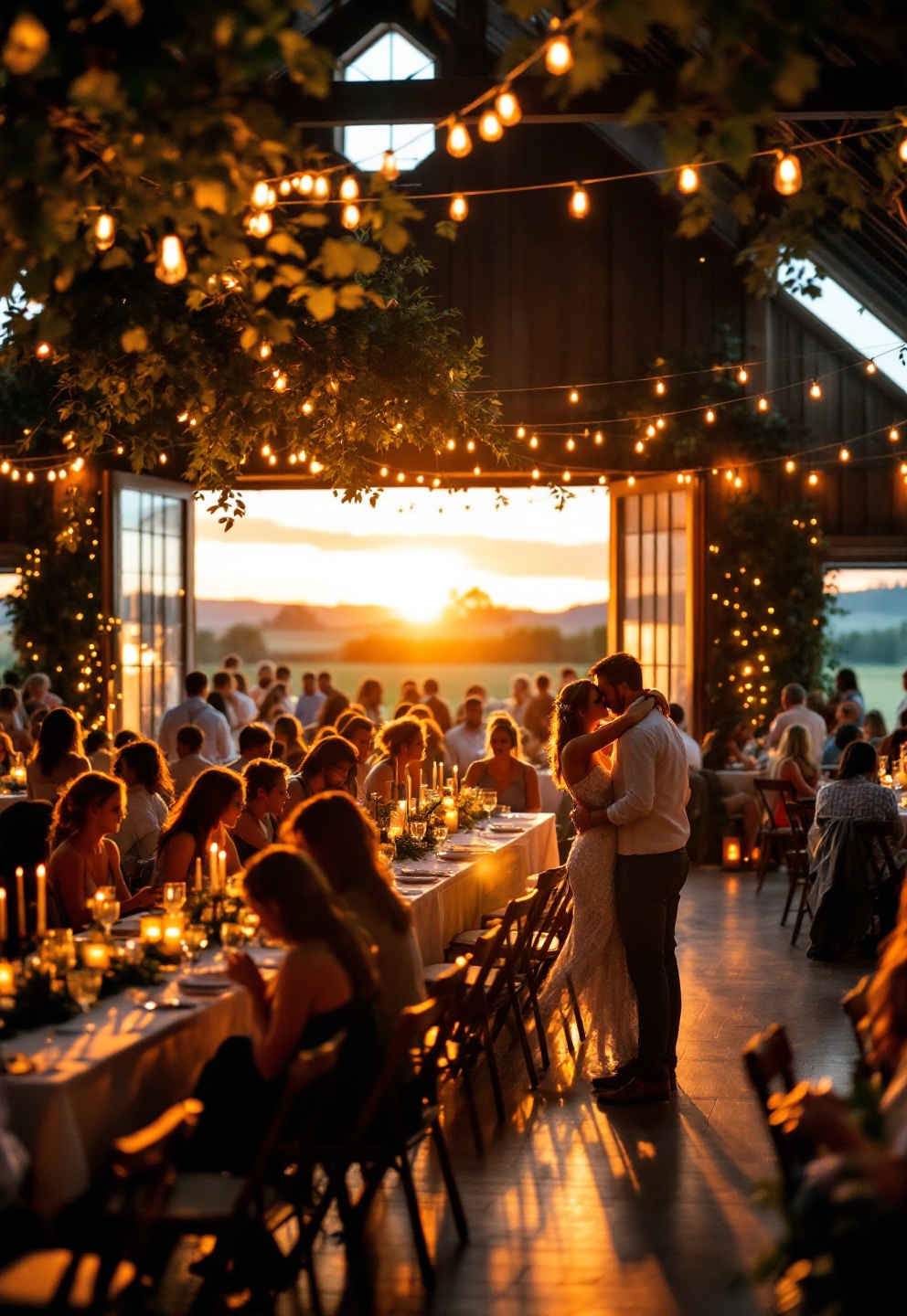
Converted barn venues are blank canvases—here are five in-demand styles and how to personalize each (many elements can be scaled up or down to control spend):
-
Classic Rustic: Wood farm tables, burlap runners, mason jars, string lights, wildflower bunches.
DIY: Borrow family quilts, make your own signage.
Vendor add-on: Professional uplighting, custom-built ceremony arch. -
Elegant Rustic/Modern Farmhouse: White linens, greenery garlands, cross-back chairs, soft draping, barn chandeliers.
DIY: Assemble your own lounge space with thrifted chairs/couches.
Vendor add-on: Statement floral installations or specialty rentals. -
Boho/Wildflower: Pampas grass, rugs, macramé, mismatched vases, relaxed seating areas.
DIY: String your own bistro lighting, thrift textiles.
Vendor add-on: Professional dried floral clouds or photo booth backdrops. -
Vintage/Romantic: Antique candlesticks, pastel florals, candelabras, lace runners, brass and crystal.
DIY: Collect family photos or old frames for displays.
Vendor add-on: Vintage tabletop rentals. -
Nature-Forward/Eco: Potted plants, local/seasonal flowers, compostable wares, reclaimed décor.
DIY: Use found materials + local flowers.
Vendor add-on: Farm-to-table catering tie-ins, reusable décor rental.
Sustainability is accelerating, with 36–45% of couples now seeking eco-friendly options—see our sustainable event décor guide. Pairing budget-friendly DIYs with a few statement splurges gives the best of both worlds.
For creative lighting and sensory experiences, explore multi-sensory wedding design.
What most guides miss: Under-covered topics every couple and venue owner should know
Planning a barn wedding goes beyond style: couples and operators often overlook essential operational and guest-experience factors, with real cost, safety, and satisfaction implications.
- Operational risk & contingency: Ask if the barn has a backup power generator, hardened fire escape/safety plans, and whether insurance covers event incidents (rural properties face higher fire/power outage risk).
- Accessibility & inclusivity: Only a fraction of rural barns are truly ADA-compliant—ask if paths, bathrooms, and entrances are accessible. If you have even one elderly or disabled guest, get specifics (elevators/ramps, door widths, lighting).
- Neighbor & regulatory risk: Confirm long-term stability: is the venue in good standing with neighbors? Have there been recent changes to noise, curfew, or local land-use laws? Surprising last-minute restrictions—increased curfews, parking caps—can and do happen.
- Sustainability metrics: It’s easy to “greenwash” a barn venue. Ask about septic systems, waste management, and local sourcing. Only a handful are tracking their true eco footprint—see what sustainable venue hire really means.
- Technology constraints: Wi-Fi and cell coverage are very often minimal at barns—if you plan to stream (or vendors need connectivity), ask for actual speed test results and onsite AV walk-throughs.
Conversion costs for barn venues average $200,000–$600,000—so don’t be surprised by higher fees at top-tier, modernized sites. You’re paying for infrastructure as much as charm (source).
For more on the rise of adaptive reuse venues (including barns, warehouses, greenhouses), see our adaptive reuse venue guide.
How to book: Timeline, negotiation tactics, and next steps
Ideal booking window: Start touring barn wedding venues 12–18 months ahead if you want a prime Saturday or peak-fall date; for Fridays or off-season, 8–10 months can suffice.
- First step: Lock your guest list, short-list three barns, and schedule in-person tours ASAP.
- During tours: Use the 12-question checklist from above. Take photos and notes for easy cross-venue comparison.
- Negotiation tactics: If your date is flexible, ask for off-peak discounts or value-adds—extra setup hours, bundled rentals, or waived ceremony site fees.
- Deposit/contract: Most barns require a nonrefundable deposit (20–50%), with balance due 30–90 days pre-event. Don’t sign until all “possible extra” fees are in writing.
- After booking: Secure core vendors (catering, décor, DJ/band) within 1–2 months; confirm your backup rain/weather plan and send overnight lodging suggestions to guests early, especially in rural areas with scarce hotels.
For a full wedding timeline with checklists, see our Plan Your Event and Ultimate Event Planning Guide resources.
Quick printable: “Barn Venue Tour Script” + Budget Snapshot
Copy and save this script for your barn venue tour:
- Are you fully permitted for weddings of our size?
- What is your base fee and what’s included?
- Permanent restrooms (indoor/ADA)? Locations? Quality?
- Heating/AC—central, portable, none?
- Maximum indoor capacity in bad weather?
- Setup and cleanup timing/logistics?
- Required or preferred vendor policies?
- Any extra fees common for your clients?
- What’s the music cut-off and curfew?
- Parking, lighting, and shuttle support?
- Manager on-site during our event?
- Any recent changes or events we should know?
Budget snapshot for 120-person barn wedding:
- Base rental: $4,000–$12,000
- Catering: $9,000–$15,000
- Décor/lighting: $3,000–$10,000
- Add-ons (restrooms, rentals, tent): $2,500–$6,500
- Total venue-related: $10,000–$20,000+
- Typical lead time: 9–12+ months (18+ for peak dates)
For deeper budgeting and checklists, see our catering and rentals guide.
FAQs
Can I have an outdoor ceremony and indoor reception at most barn wedding venues?
Many barn venues offer both, but always ask about the plan for inclement weather. Confirm if the barn’s indoor space can legally and comfortably accommodate all your guests for both ceremony and reception if rain strikes.
How far in advance do I really need to book a barn wedding venue?
For peak Saturdays (especially in September/October), plan to book 12–18 months out. Fridays, Sundays, and off-peak months are more flexible, but even then barn venues commonly book at least 6–9 months ahead.
Are barn venues suitable for winter weddings?
Some are, but only if the building is well-insulated and has robust heating throughout. Many barns close or accommodate only small events in winter, so verify operation policy and physically inspect the HVAC setup in January/February before booking.
What are the most common hidden costs with barn weddings?
Frequently missed extras include upgraded restrooms, setup/cleanup fees, required vendor packages, overtime for late events, tent rentals for backup, and extra chair/table rentals. Insist on a detailed contract that spells out all potential charges.