
Blog Post:
Drapery event decor ideas are rapidly becoming the defining element of luxury weddings and elite corporate functions. For planners seeking a fresh edge that combines showstopping visuals with venue compliance and client confidence, this is your playbook for premium textile installations—practical, high-impact, and market-proven.
Key Takeaways
- Luxury drapery installations now drive up to 12% of event rental profits and are in record demand post-2021 (Wifitalents).
- Smart planning means knowing not just the trends, but the venue restrictions, safety compliance, and technical specs before quoting or designing.
- Boutique firms win when they deliver both innovative fabric design concepts and verifiable, venue-approved installation options with transparent pricing.
- Why drapery matters now — market signals and demand
- Spend expectations — budgets and what “luxury” typically means
- Venue restrictions & compliance — the unknowns planners must anticipate
- Technical requirements & safety certifications every planner should ask for
- Top 7 innovative drapery event decor ideas high-end features are missing
- Installation methods — ceiling rigging and compliant alternatives for no-ceiling-rigging venues
- Materials & finishing: choosing fabrics (velvet, voile, satin) and hardware for impact and durability
- Pricing models & sample luxury rental packages
- Real client pain points & contract clauses that prevent disputes
- Vendor vetting checklist & what to ask before you hire
- Three short case studies / mood boards (ballroom, industrial loft, tented)
- Sources to complete reporting (primary research checklist)
- FAQ: Drapery Event Decor Ideas
Why drapery matters now — market signals and demand
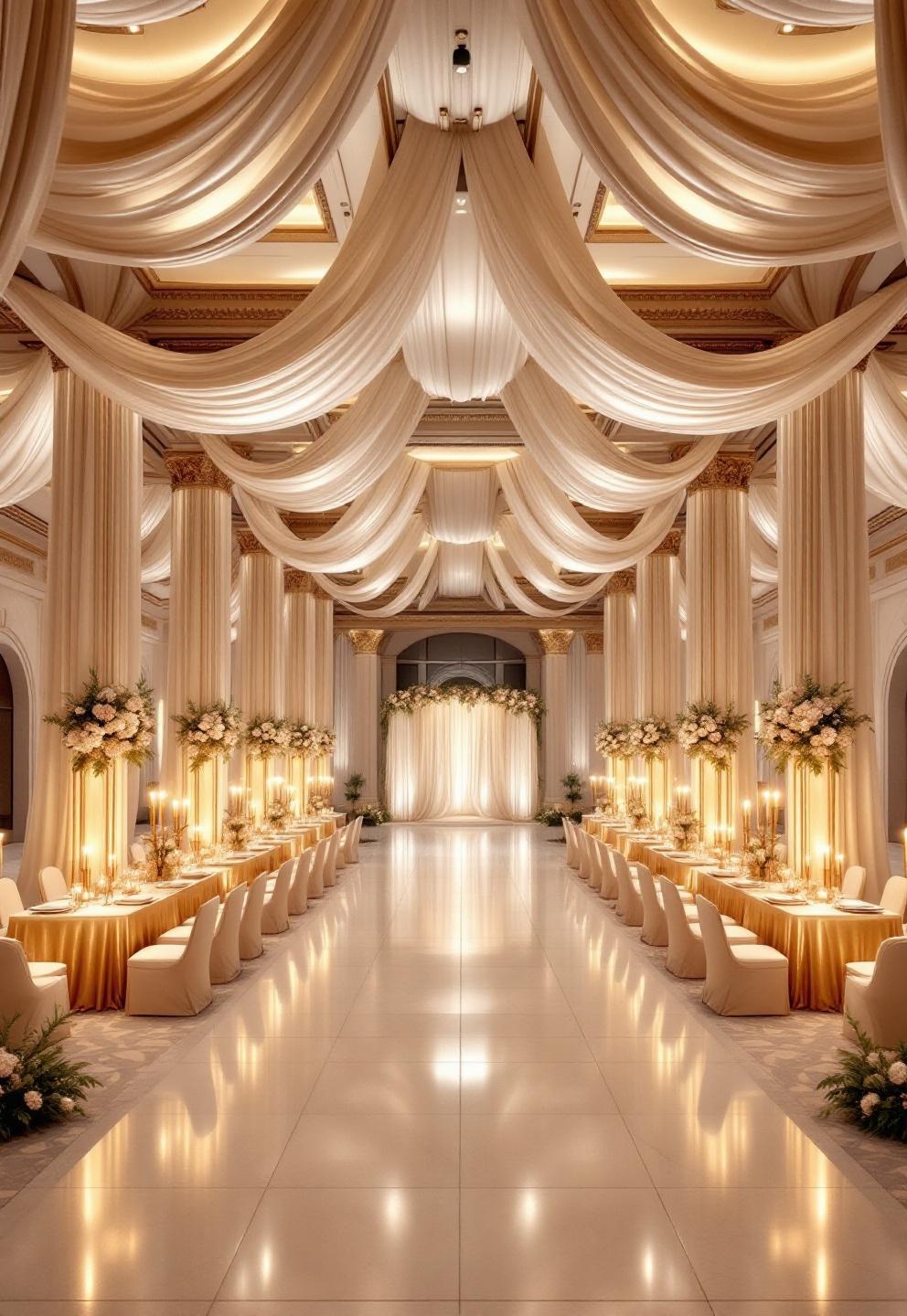
Drapery event decor ideas are not just a trend—they are an industry shift. Since 2021, demand for specialized linen and drapery rental services has increased by 50%, making it an essential profit driver for boutique event firms (Wifitalents). The global wedding decorations market is projected at $14.7 billion by 2026, rising at over 9% CAGR (Deep Market Insights). Drapery rentals contribute up to 12% of total event rental profits, and luxury/premium events account for nearly a third of the total market. After years of minimalism, affluent clients are favoring layered, sculptural, and immersive textile installations—especially ceiling and wall treatments that transform any venue into a bespoke experience. If you aren’t pitching advanced drapery concepts, you’re leaving revenue (and creative leadership) on the table.
Spend expectations — budgets and what “luxury” typically means
How much should you or your client expect to invest in elevated fabric draping wedding venue features? Across the U.S., the average event furniture and decor rental budget is $2,400. Yet in the luxury segment, where total wedding budgets range from $96,000 to $500,000 (Think Splendid), it’s common to allocate 20–30% to decoration alone. For high-impact drapery, fabric choice (velvet, voile, silk) and rigging complexity are the top cost drivers. “Luxury” generally means custom layout, imported or specialty materials, dedicated crew, flame certifications, and seamless install/remove scheduling included in package pricing. As a reference point, custom
For a breakdown of cost influences and inspiration for abundant, maximalist looks, see our maximalist wedding tablescape guide.
Venue restrictions & compliance — the unknowns planners must anticipate
Venue policies make or break drapery event decor ideas—especially ceiling drape wedding plans. Yet most competitor articles gloss over compliance or base guidance on anecdote. There are three areas where planners get blindsided:
- No drill/no tamper ceilings or beams
- Load limits (especially in historic or load-restricted venues)
- Inspections and fire safety sign-offs (open flame, flame-retardant requirements)
To build trust with clients and vendors, use this condensed pre-bid venue checklist:
- Request written venue rigging/installation guidelines
- Ask about ceiling anchor points—are any permitted?
- Clarify fire code (NFPA/local authority) and required certifications
- Check window, door, HVAC, and exit access—they can’t be blocked
- List all time restrictions for install/remove and noise limits
- Request a copy of the standard venue contract to identify hidden restrictions
For events embracing sensory and immersive elements that must also stick to code, see sensory wedding decor for compliance-friendly ideas.
Technical requirements & safety certifications every planner should ask for
For every fabric draping wedding venue project, you need documentation on three levels: fabric, rigging, and installer. Why? Venues require flame-resistant certificates (
- Material certificates (NFPA 701, CA Title 19, or local flame test doc—specify which is required in your region)
- Rigging plan approved by a certified rigger or structural engineer (especially for ceiling drape wedding installs)
- Installer business license + insurance policy with at least $1 million liability coverage
- Copy of mounting hardware specs and load ratings
- Proof of installation crew’s training/certification where required
“Our minimum requirement is always NFPA 701 or local equivalent. If the vendor can’t produce documentation, we can’t let them hang anything overhead.”
— Evelyn Romero, Venue Operations Manager, Houston Ballroom Collective
Download our Drapery Vendor Contract Compliance Addendum to include in your next quote packet.
Top 7 innovative drapery event decor ideas high-end features are missing
Most articles repeat basics—but luxury clients want editorial, high-drama designs nobody else is offering. Here are seven drapery event decor ideas vetted by leading creatives for 2025–2026:
- Sculptural pleat installations: Sweeping, multidimensional pleats arched as gateways or backdrops. Best for ballrooms or galleries. Use heavy voile or silk with internal armature for shape-stability. Add gobo lighting for shadow dimension.
- Layered translucent canopies with LED washes: Multiple sheers layered from ceiling to floor, lit by
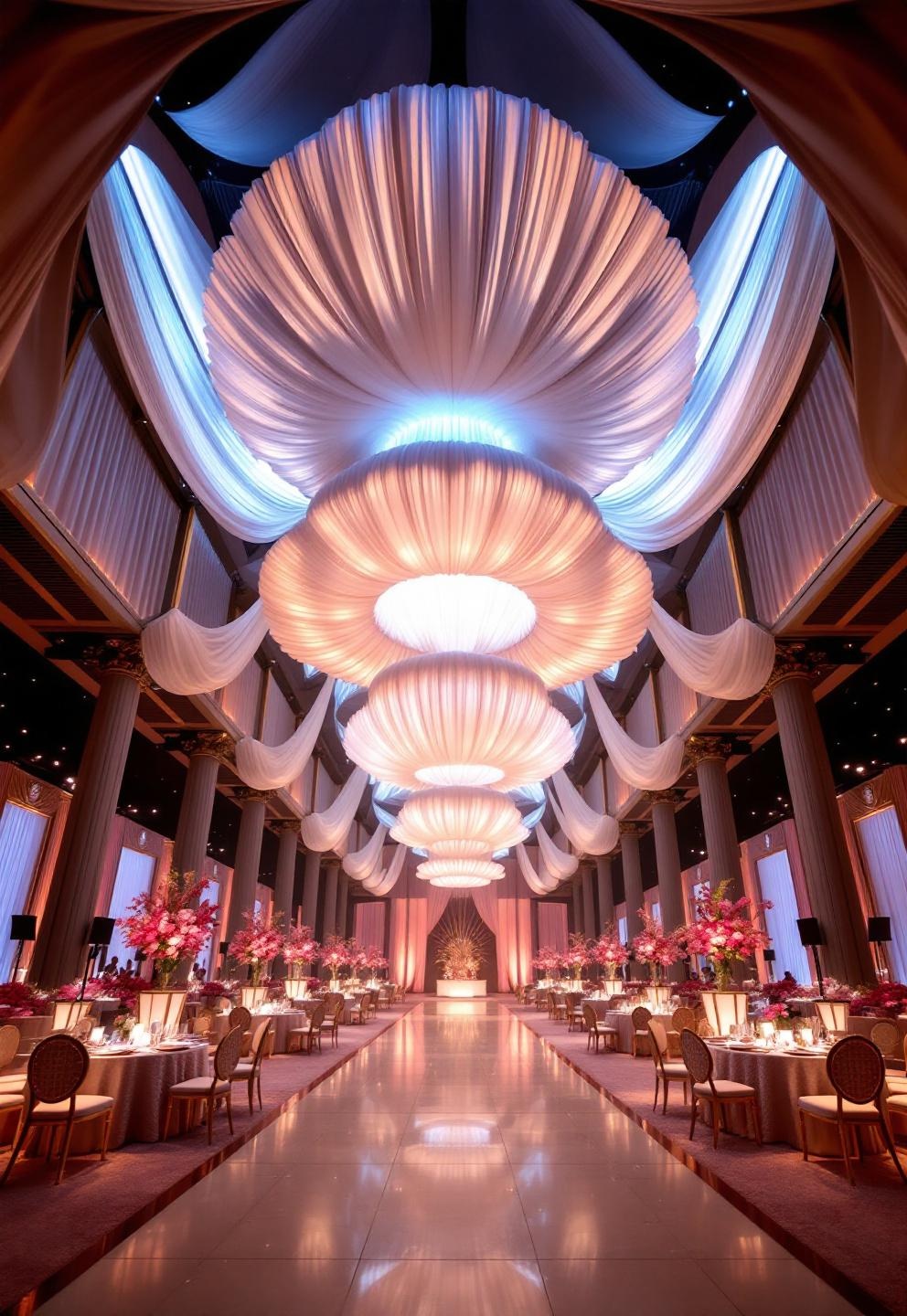
- Suspended textile “chandeliers”: Circular or geometric frames draped in braided fabric, hung at varying heights. Works well above dance floors or bar lounges; combine with modern pendant lighting.
- Velvet feature walls with architectural trims: Floor-to-ceiling velvet drapery decor, trimmed in metallic or contrast piping. Defines stages or lounge nooks with high-end editorial texture.
- Modular fabric partition systems: Freestanding fabric “walls” constructed on truss or tension frames. Use to carve out cocktail zones or galleries in open-plan venues where wall installation isn’t allowed.
- Immersive ceiling-cloud installations: Lightweight voile or organza shaped to mimic clouds, suspended in clusters across the ceiling. Use discreet wire mesh frames and kinetic fans; best for high or open ceiling venues.
Want more breakthrough design inspiration? Explore sculptural floral installation and Cloud Dancer event decor for seamless textile/floral integration.
Installation methods — ceiling rigging and compliant alternatives for no-ceiling-rigging venues
The ultimate client sell is a safe install that maximizes drama and survives venue review. Here’s how:
Ceiling Rigging: Approved Method
- Site survey: Photograph ceiling structure; verify anchor availability and load specs with the venue.
- Calculate load for total drape weight, including hardware.
- Engage a certified rigging crew. Require written plan and insurance docs.
- Staged install: Begin with rigging, test all anchors, confirm no lines block fire sprinklers/exit signs.
- Post-install safety check with venue management.

Workarounds: No-Ceiling-Rigging Venues
- Pipe-and-drape systems: Freestanding, self-supporting, weighted for stability. Quick to install and remove. Pros: No anchors/permits, flexible. Cons: Can be less stable on uneven floors; limits height.
- Wall-anchored tension cables: Use only if allowed; anchors at approved wall points to stretch cables as drape armature.
- Truss frames: Aluminum trussing stands in for ceiling beams; can be masked in fabric for seamless look.
- Stage/column-based systems: Anchor drapery to staging/riser units or building columns for ceiling effects without direct rigging.
- Fabric wall/column wraps: Use continuous fabric to “wash” walls or columns, creating a ceiling illusion via uplighting.
Labor for simple pipe-and-drape is around 2–4 hours for a crew of three; certified rigged assemblies may require 4–8 hours plus venue inspection. Always confirm which approach is signed off in the contract.
If your look requires fabric wall installation event techniques with zero ceiling access, check out the serpentine table wedding article for complementary wavelike floral/fabric layouts.
Materials & finishing: choosing fabrics (velvet, voile, satin) and hardware for impact and durability
Material choice does more than define look—it sets perception of luxury, fire safety, and price point. Here’s a comparative breakdown:
| Material | Look / Feel | Durability | Flame Retardant? | Best Hardware | Cost Perception |
|---|---|---|---|---|---|
| Velvet | Rich texture, deep color | High | Must be treated | Pipe, heavy-duty track | Premium |
| Voile | Sheer, ethereal | Medium | Often treated | Light truss, tension rods | Upscale |
| Satin | Glossy, classic | Medium | Should be treated | Track, pipe | Mid/high |
| Cotton Poly Blends | Matte, smooth | Medium-high | Available pre-treated | Pipe, track | Budget to mid |
Details matter: Hemming (double-stitch lower edge), hidden grommets, colored or metallic trims, and integrated lighting channels will distinguish a showpiece install. Remember, upgrading to velvet drapery decor not only maximizes visual impact but yields higher profit margins—12% of total event rental profits are traced to police quality linens and drapery (Wifitalents).
Pricing models & sample luxury rental packages
Market confusion around luxury drapery rental wedding pricing is rampant. Here are three useful package frameworks (based on U.S. major market rates for 2026):
- Starter: $1,500–$3,000
- Includes: pipe-and-drape, standard poly/voile, basic install/remove, fire certificate, no ceiling rigging.
- Bespoke: $3,500–$7,500
- Includes: specialty fabrics (satin/velvet), tailored install plan, combination ceiling-wall treatments, engineer sign-off, flame certs, moderate complexity rigging, two site visits.
- Signature Luxury: $10,000–$25,000+
- Includes: custom patterning, velvet/metallic trim, certified ceiling rigging, DMX-integrated lighting, all certifications, dedicated crew, on-call trouble-shoot, top-tier insurance, contingency hold, expedited removal.
Final pricing is driven by total square footage, material weight/cost, install hours, rigging complexity, insurance, and permit fees. For current trends and influences on decor price, see Dataintelo’s Event Decoration Service Market Report.
Want special event budget examples for immersive designs? Browse our cobalt blue wedding decor guide for real-world breakdowns.
Real client pain points & contract clauses that prevent disputes
Vendor review and interviews highlight the most persistent complaints with fabric draping wedding venue suppliers:
- Late or incomplete setup (missed start time, not event-ready on client walkthrough)
- Incomplete removal/damage to venue afterward (leading to withheld deposits)
- Unexpected “damage” deductions from security deposits
- Poor communication—especially last-minute crew substitutions or unclear timelines
Protect all parties with these contract best practices:
- Specify install/remove windows with explicit late penalties
- Include itemized deposit terms: what constitutes “damage,” required photo evidence, and response times
- Add a communication clause: timeline for updates, approval of substitutions, and primary point-of-contact
- On-site inspection checklist signed by both parties at install/remove
“Most disputes stem from vague contracts. We insist our template includes staged install reports and shared photo logs at removal. It saves headaches for everyone.”
— Paul Kim, Senior Rigging Supervisor, Eventure NYC
Download: Drapery Vendor Contract Compliance Addendum (PDF)
For examples of proactive contract handling in sustainable settings, check out eco-friendly event decor rental negotiation tips.
Vendor vetting checklist & what to ask before you hire
- Request all fabric fire/flame-retardant certificates (NFPA 701 or local)
- Proof of certified rigging crew—ask for credentials, not just “years experience”
- General liability insurance (min $1M preferred)
- Portfolio of installs at similar scale/venue type
- Install and remove timeline agreements in writing
- Detailed damage, loss, and cancellation policy—don’t settle for single-paragraph boilerplate
- Recent client references (last 12 months)—call them; do not just read testimonials
Red Flags: Vague answers to fire code, no written policies, “We’ve never had a problem” attitude, or refusal to itemize deposit deductions.
Negotiation tip: Where possible, request a video call walk-through of previous similar installs to see actual fabric/running crew in context. This increases client confidence before booking a luxury drapery rental wedding package—especially as demand is up 50% post-pandemic (Wifitalents).
Three short case studies / mood boards (ballroom, industrial loft, tented)
1. Ballroom: Editorial Whiteout
- Objective: Immersive, monochromatic ceiling drape wedding experience with LED accent lighting
- Materials: White voile, NFPA 701 certificate, light truss system, programmable uplight
- Budget: Signature Luxury ($13,500)
- Timeline: 8 hours install/4 hours removal; venue inspection at both ends
- Visual Prompt: Overscale pleated canopies with dropped chandelier clusters. See more mood direction in Cloud Dancer event decor.
2. Industrial Loft: Velvet Luxe Partition
- Objective: Carve out lounge from open floor via velvet drapery decor partitions
- Materials: Deep cobalt velvet panels, steel truss base, bronze piping trim, DMX-integrated strip LEDs
- Budget: Bespoke ($6,400)
- Timeline: 4 hours install/3 hours remove
- Visual Prompt: Vertical color-blocked velvet, ceiling reflection. Inspiration in cobalt blue wedding decor.
3. Tented: Sheer Canopy, Maximalist Color
- Objective: Layered silk canopies with vivid LED color washes for spring corporate gala
- Materials: Multicolor sheers, flame-treated, anchored truss frame
- Budget: Starter ($2,200), scalable upward
- Timeline: 2 hours install/1 hour removal
- Visual Prompt: Overlapping sweeps, perimeter uplighting, paired with low florals. See further ideas in meadow style tablescape looks.
2025–2026 event design trends point clearly to immersive, sculptural, and color-rich draping as the next standard—plan proposals accordingly (Dreams In Detail).
Sources to complete reporting (primary research checklist)
To fill research gaps, secure these primary sources before your next luxury drapery install:
- Venue technical managers (policy, anchor points, code restrictions)
- Local fire marshal or NFPA regional rep (certification, flame testing requirements)
- Certified rigging companies (rigging best practices, load limits, insurance docs)
- Three premium drapery rental firms (ask for compliance docs, portfolio, install timelines, dispute resolution protocol)
- Sample copies of actual venue contracts and permit policies—scrutinize for hidden clauses
Suggested Questions:
- What are the five most common compliance issues/events you see with drapery installation?
- Can you provide written certification examples (fire, rigging, insurance)?
- What is your standard dispute-resolution process if an install is delayed or a venue claims damage?
Reality check: Few published resources cover these compliance and planning details. Primary research (contracts, interviews, site visits) closes the knowledge gap—essential for event firms bidding on six-figure drapery projects.
Like this market-informed approach? See our AR event decoration vendor checklist for more primary sourcing strategies with advanced event tech vendors.
FAQ: Drapery Event Decor Ideas
How do I know if a venue allows ceiling draping?
Always request the venue’s written rigging and installation guidelines before quoting or concepting. Many modern ballrooms and historic sites prohibit drilling or overhead attachments. If the venue contract is silent, ask directly—you may need alternative solutions like pipe-and-drape or truss frames.
What safety certifications must drapery vendors provide?
The industry gold standard is NFPA 701 flame resistance certification (U.S.), with similar local codes elsewhere. Insist on a copy for each fabric ordered. Also verify vendor insurance, rigging crew certification, and an approved install/removal plan.
What’s the average cost for luxury drapery installation?
Packages typically range from $3,500 (bespoke pipe-and-drape) up to $25,000 or more (custom velvet features, certified ceiling rigging, full lighting integration). Pricing depends on fabric, install complexity, venue restrictions, and included certifications or labor. Always get a detailed estimate with all inclusions itemized.
What’s the best way to avoid post-event deposit disputes?
Your contract should require an on-site walkthrough at both install and removal, with shared inspection photos documenting any pre-existing damage. Itemize what constitutes chargeable damage, and define a timeline for deposit return and dispute mediation.
Where can I see more examples of immersive or innovative drapery looks?
Explore the sensory wedding decor guide, sculptural floral installation, and Cloud Dancer event decor articles for advanced inspiration, mood boards, and real-planner how-tos.
Did you try this inspiration ?
There are no reviews yet. Be the first one to write one.