
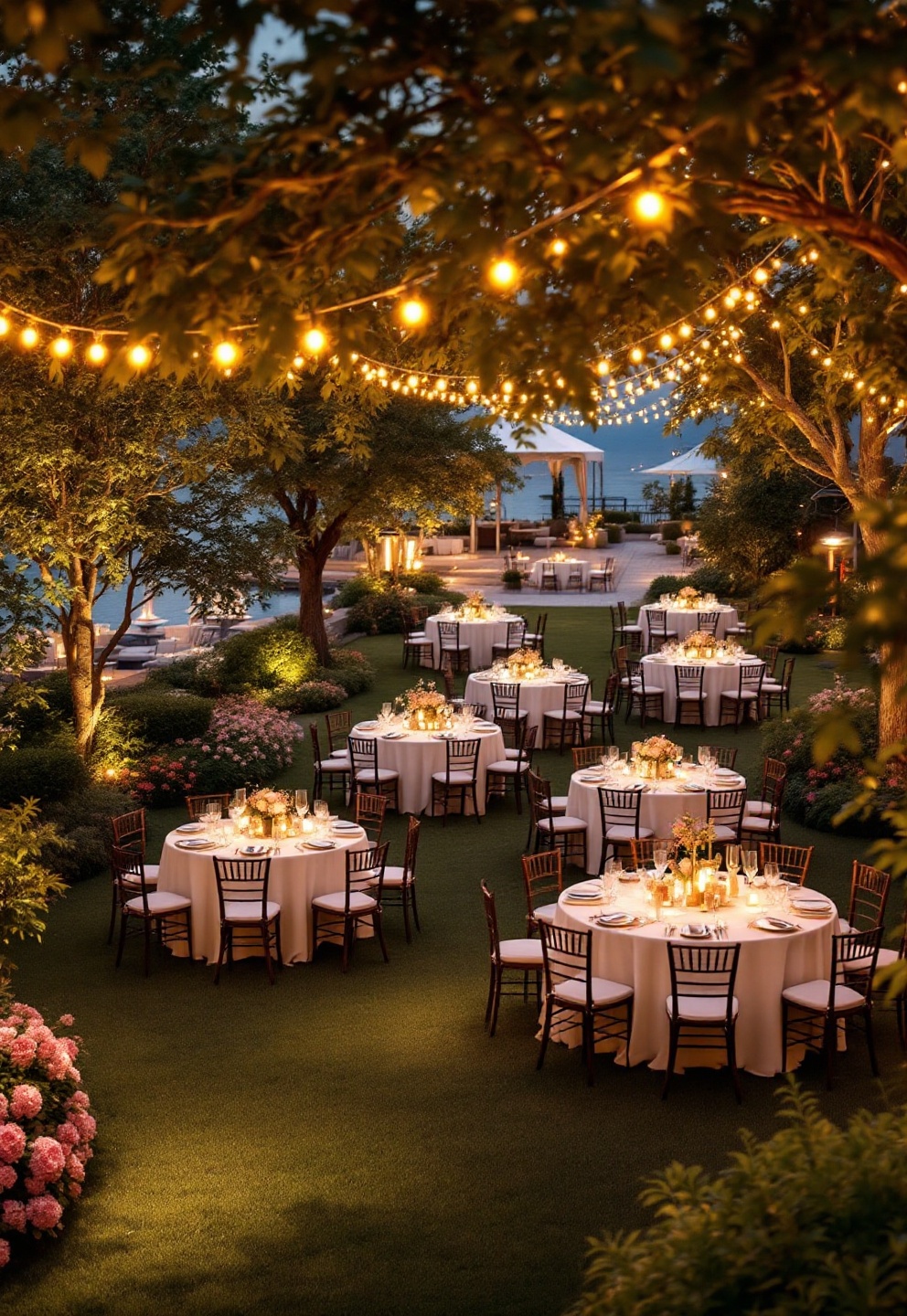
Outdoor venues are the ones that look effortless in photographs and are the hardest to run in practice. The open setting that sells the booking is also exposed to weather, short on power and plumbing, and dependent on logistics an indoor venue handles for you. Hire one well and it’s unforgettable; hire one without a plan and you’re improvising in the rain. This is what to check before you sign.
The weather plan is the whole plan
Every outdoor booking lives or dies on the contingency. Before you fall for a view, ask exactly what happens if it rains, and get a real answer, not “we’ll see.” Is there a marquee option, an indoor backup room, a covered area large enough for all your guests? A tent isn’t a small add-on; it can be a significant cost and needs booking as early as the venue itself. If the site has no wet-weather alternative at all, treat that as a serious risk, not a detail to sort out later.
Power, water, and the things buildings give you for free
Indoor venues quietly provide power outlets, toilets, lighting, and a kitchen. Many outdoor sites provide none of these. Walk the site and ask: Is there mains power, or do you need a generator (and where does it go so guests don’t hear it)? Are there permanent toilets or must you hire portable ones? What’s the lighting plan once the sun goes down? Is there a catering prep area, or does the caterer need to bring everything? Each gap is a line item, and together they can rival the venue fee.
Ground, access, and load-in
Practical access decides how smoothly setup goes. Can vehicles reach the site to drop equipment, or is everything carried in by hand? Is the ground firm enough for a marquee and for guests in heels, or does it turn to mud after rain? Where do guests park, and how far is the walk? These unglamorous questions are what separate a calm setup from a chaotic one.

Permits, noise, and curfews
Outdoor events attract rules that indoor ones don’t. Many sites have a noise curfew, often around 10 or 11pm, which directly shapes your timeline and whether amplified music is allowed. Public or council-owned spaces may require a permit or licence, and serving alcohol can need its own authorisation. Confirm all of this in writing before you build a schedule around it.
Outdoor hire checklist
| Item | Question to confirm |
|---|---|
| Weather backup | Marquee or indoor space for full guest count? |
| Power | Mains supply or generator needed? |
| Toilets | Permanent facilities or portable hire? |
| Lighting | Plan for after dark? |
| Access | Vehicle load-in and parking? |
| Curfew | Noise limit and end time? |
| Permits | Licence for the site and for alcohol? |
Budget for the extras, not just the fee
The headline hire price for an outdoor venue is often only part of the cost once you add the marquee, generator, toilets, and lighting that an indoor space includes. Build the full picture early using the event budget calculator so the add-ons don’t ambush you, and size your catering and guest numbers with the guest list calculator before locking the layout.
FAQ
What’s the biggest risk with an outdoor venue?
Weather, and specifically the lack of a backup. Never book an outdoor site without a credible wet-weather plan that covers your full guest count.
Do I need a marquee?
Usually yes, unless the venue has an indoor backup space. The marquee doubles as both weather cover and a defined event area, but book it as early as the venue.
Are outdoor venues cheaper than indoor ones?
The site fee can be lower, but the extras (power, toilets, lighting, marquee) often close the gap. Compare total cost, not just the hire price.
How early should I book an outdoor venue?
For peak warm-weather dates, six to twelve months ahead, since the season is short and the best sites and marquee suppliers book out quickly.